Introduction
Futures and options are among the most misunderstood instruments in the market — and the ones where most retail traders lose money. This free module keeps things at the concept and risk-awareness level: what these instruments are, how they work, and an honest look at whether they're right for you. It is not a 'how to profit from options' course — that kind of tactical material belongs in structured, expert-led training, not a free introduction.
1. What Are Derivatives?
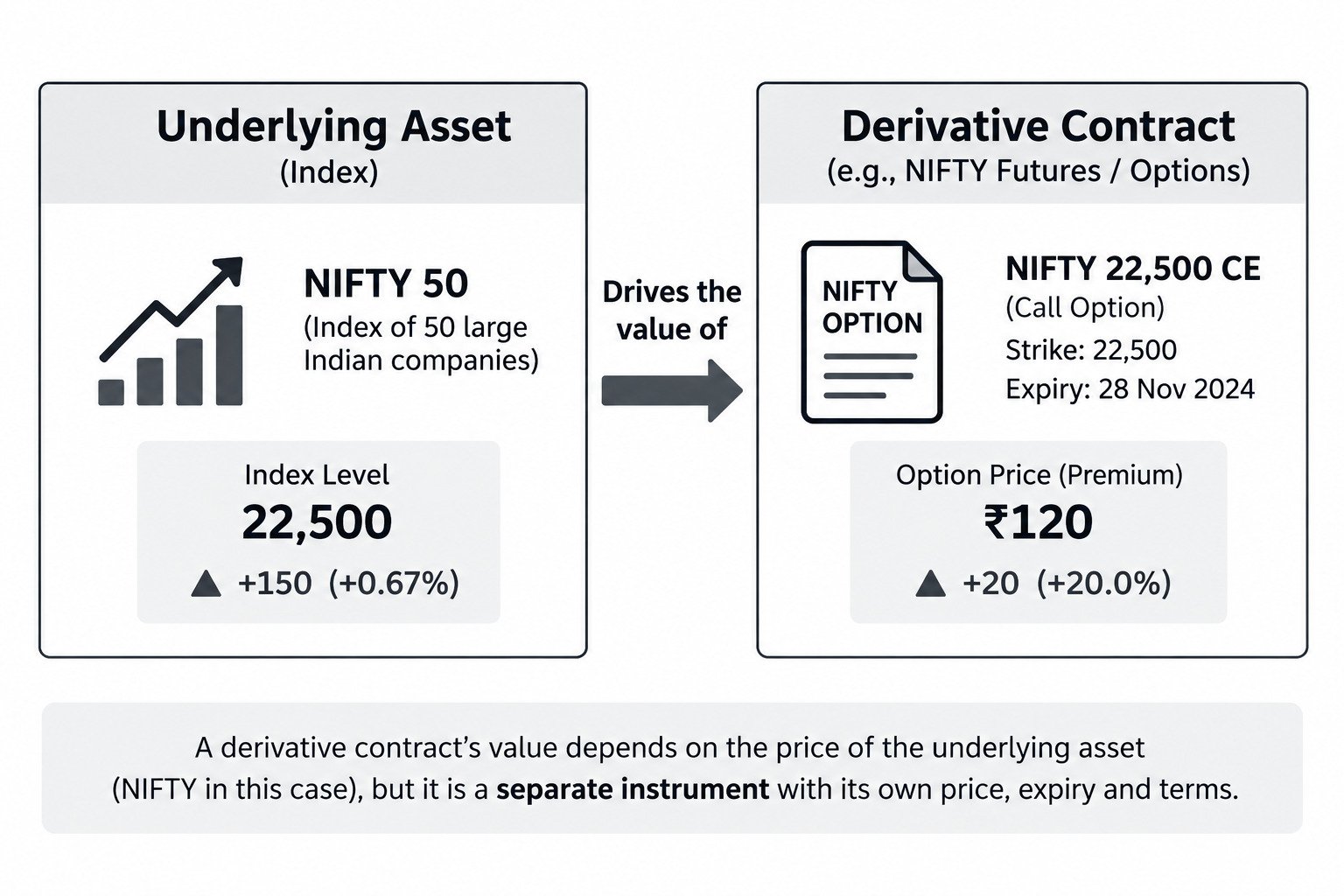
A derivative is a financial contract whose value is 'derived' from an underlying asset — like a stock, an index, or a commodity. You're not buying the asset itself; you're buying a contract based on how that asset's price moves.
The two most common derivatives in the Indian stock market are futures and options. Both let you take a position on price movement without owning the underlying shares directly — and both carry risks that are very different from simply buying a stock.
2. Understanding Futures Contracts
A futures contract is an agreement to buy or sell an asset at a fixed price on a specific future date. Both parties are obligated to honour the contract when it expires — the buyer must buy, the seller must sell, regardless of the market price at that time.
Futures are traded in fixed 'lot sizes' (a set quantity per contract) and require only a fraction of the total value upfront, called margin. This is what creates leverage — and leverage is exactly what makes futures capable of amplifying both gains and losses far beyond what the same money would do in regular stock buying.

3. Understanding Options — Calls & Puts
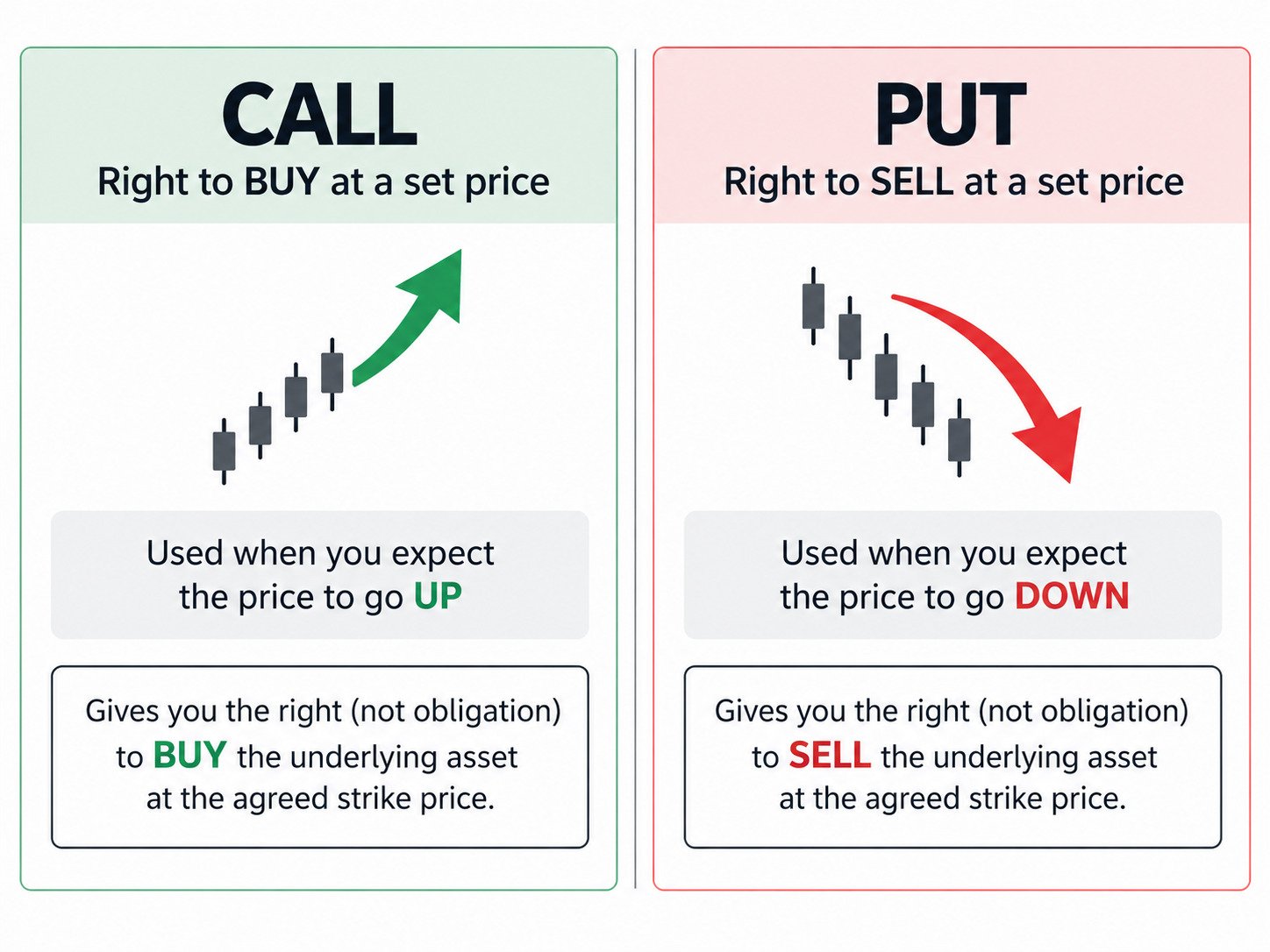
An option is a contract that gives you the right — but not the obligation — to buy or sell an asset at a set price before a certain date. This 'right without obligation' is the key difference from futures.
A 'call' option gives you the right to buy; a 'put' option gives you the right to sell. You pay a fee (called the premium) for this right. If the market doesn't move your way, the most an option buyer can lose is that premium — but as you'll see in the risk module, option sellers face a very different risk profile.
4. Key Options Concepts — Premium, Strike & Expiry
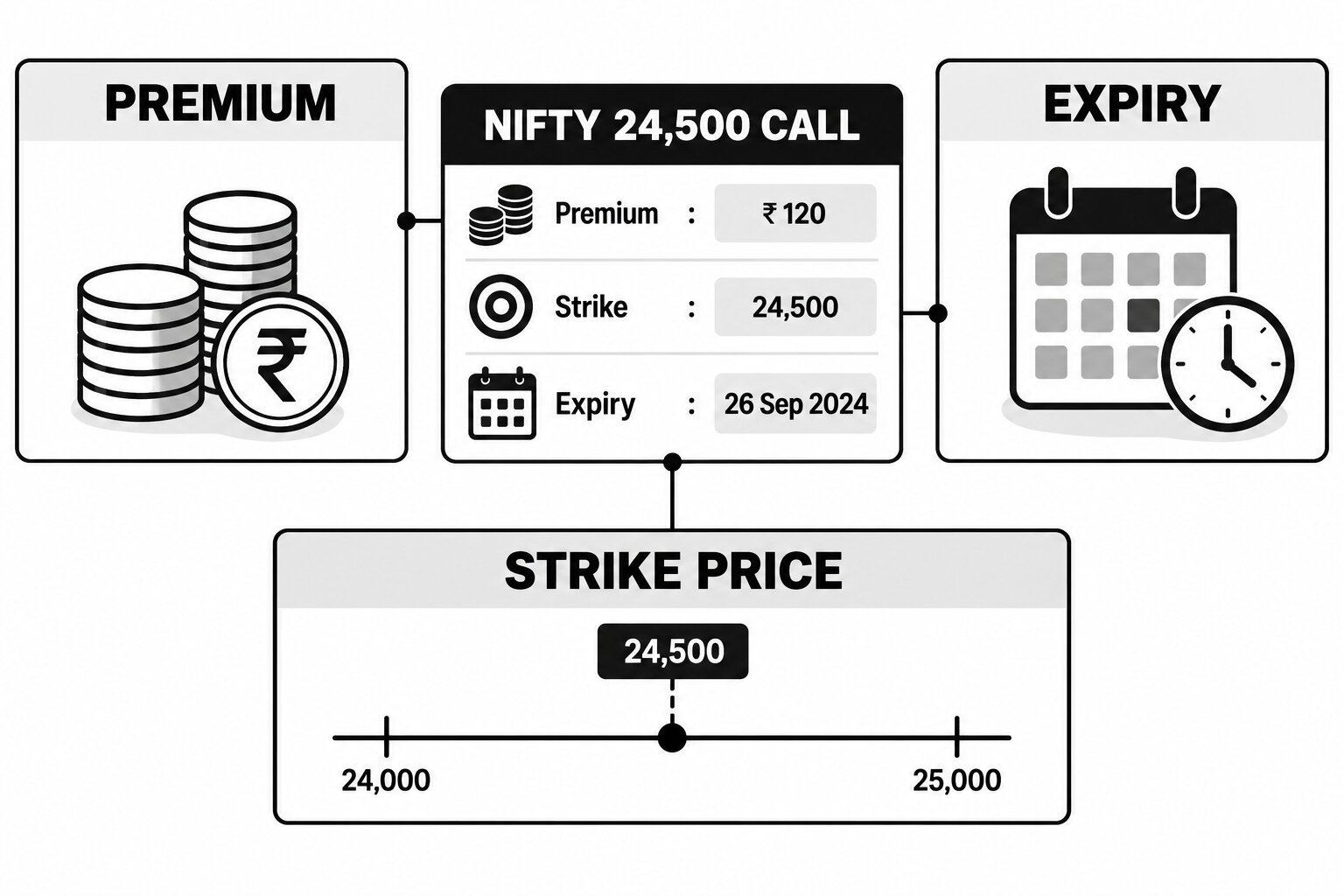
Three terms unlock most of how options work. The strike price is the fixed price at which you can buy or sell if you exercise the option. The premium is what you pay to hold the option. The expiry is the date the contract ends — after which, if unused, it simply expires.
An option's premium changes based on how far the market price is from the strike, how much time is left to expiry, and how volatile the stock is. A crucial beginner reality: options lose value as expiry approaches — time is constantly working against an option buyer, even when the stock barely moves.
5. The Real Risks of Futures & Options
This is the most important section in this module. Derivatives are where the well-known statistic — that the large majority of retail F&O traders lose money — comes from. The reasons are structural, not just bad luck.
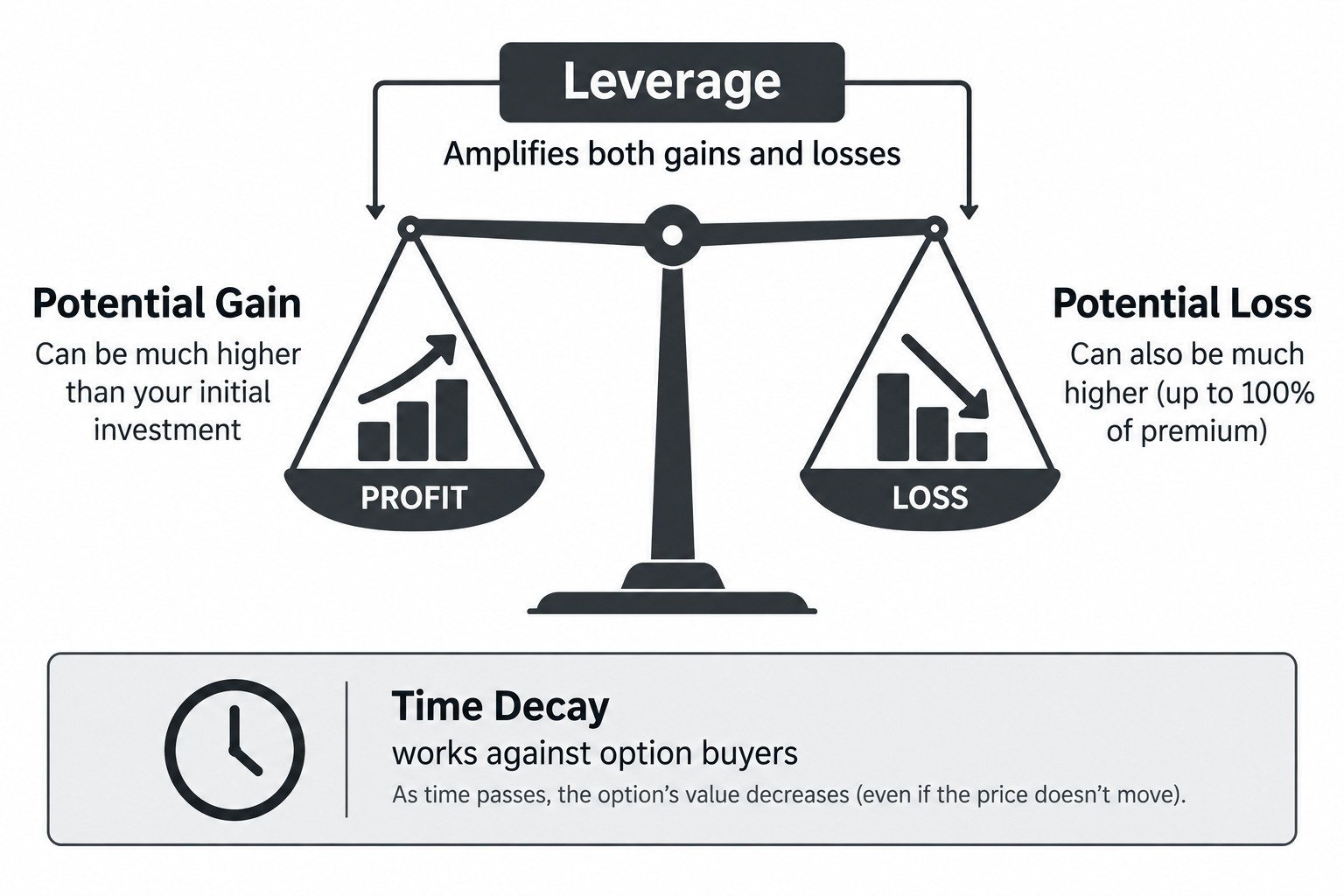
Leverage cuts both ways: the same margin that magnifies a gain magnifies a loss just as fast. Time decay steadily erodes option-buyer positions. Option selling can carry theoretically unlimited losses for a limited premium gain. And overtrading — encouraged by the low upfront cost — quietly drains capital through fees and repeated small losses. None of these are reasons F&O is 'bad,' but they are reasons it demands far more knowledge and discipline than buying shares.
6. Should You Even Trade F&O?
Most F&O content skips this question entirely. We won't. Futures and options are powerful tools for hedging and for experienced traders — but they are genuinely not where a beginner should start.
A sensible path: build a solid foundation in how markets, charts, and risk management work first (the other Kaapra Campus tracks cover this). Understand delivery-based investing before leverage. And if you do move toward F&O eventually, do it through structured learning with proper guidance — not by copying tips from social media. The goal of this module isn't to push you into derivatives; it's to make sure that if you ever go there, you go in with your eyes open.
This is educational content only, not investment advice or a recommendation to trade derivatives.