Introduction
Intraday trading means opening and closing positions within the same trading day — no positions held overnight. It's fast, demanding, and one of the hardest ways for a beginner to make money. This module explains honestly how intraday trading works, what it requires, and why it deserves real caution — not to encourage it, but to make sure anyone who tries it understands what they're getting into. Educational only, not a recommendation to day-trade.
1. What Is Intraday Trading?
Intraday (or 'day') trading involves buying and selling the same stock within one trading session, closing all positions before the market shuts. Nothing is carried overnight, which removes gap risk — but replaces it with a very different set of demands.
Intraday traders aim to profit from small price movements during the day, often using leverage. That leverage, combined with the speed required, is exactly why intraday trading has both the highest potential intensity and the highest failure rate for beginners.

2. Timeframes & Reading Intraday Charts
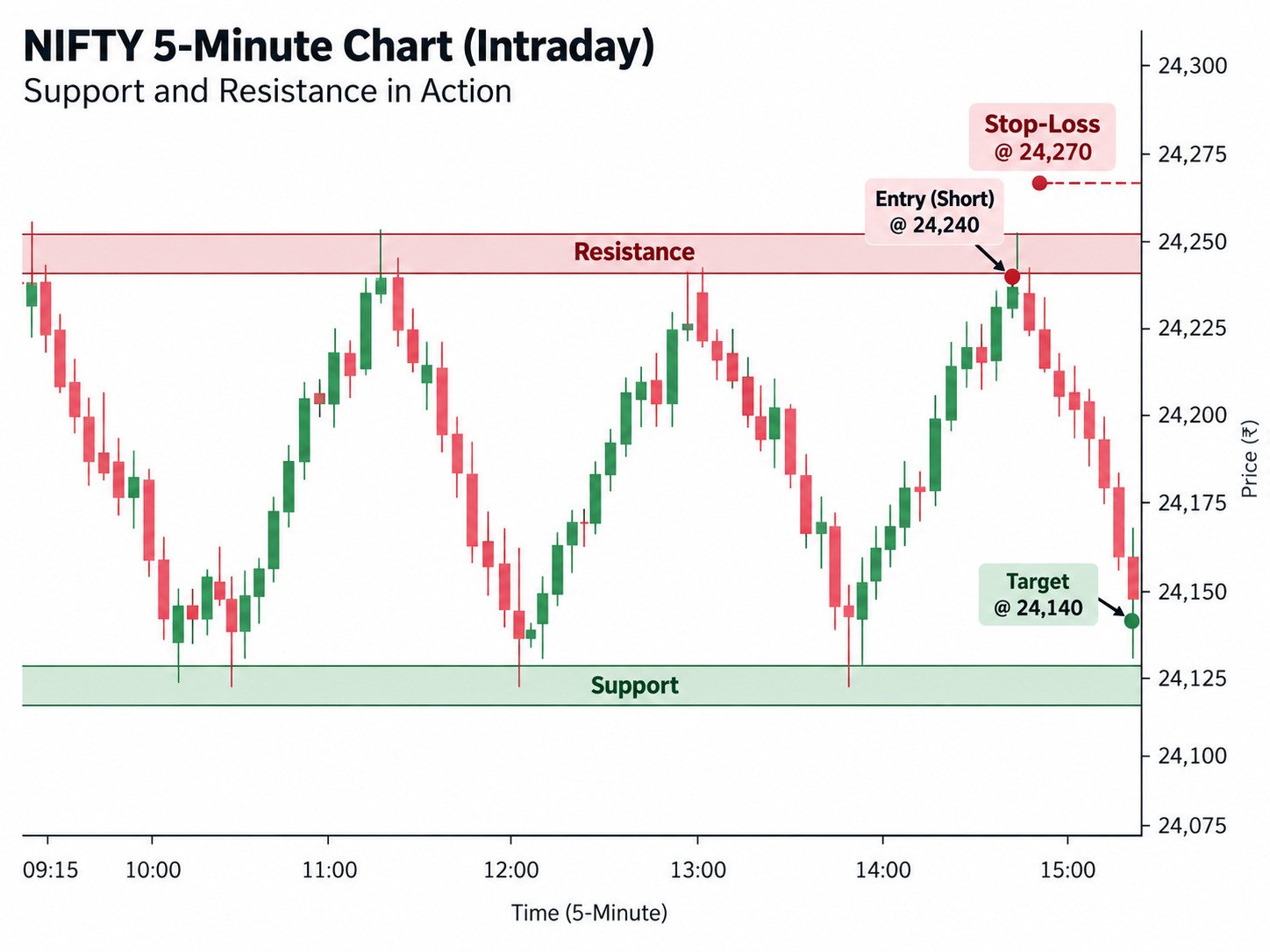
Intraday traders work on much shorter timeframes than swing traders — often 5-minute or 15-minute charts — where price action moves quickly and levels form and break within hours, not days.
The core skills are the same as any technical analysis (support, resistance, trend, volume), but applied faster and with less room for error. A level that a swing trader watches over a week, an intraday trader must judge in minutes.
3. The Role of Discipline & Speed
Intraday trading punishes hesitation and impulse equally. Decisions must be made quickly, but not emotionally — a contradiction that takes real practice to resolve. A pre-defined plan (entry, stop, target) isn't optional here; it's the only thing standing between disciplined trading and gambling.
Because trades happen fast and often, small mistakes compound quickly. Overtrading — taking too many trades out of boredom or the urge to 'win back' a loss — is one of the fastest ways intraday accounts get drained.
4. Intraday Risk — Leverage & Costs
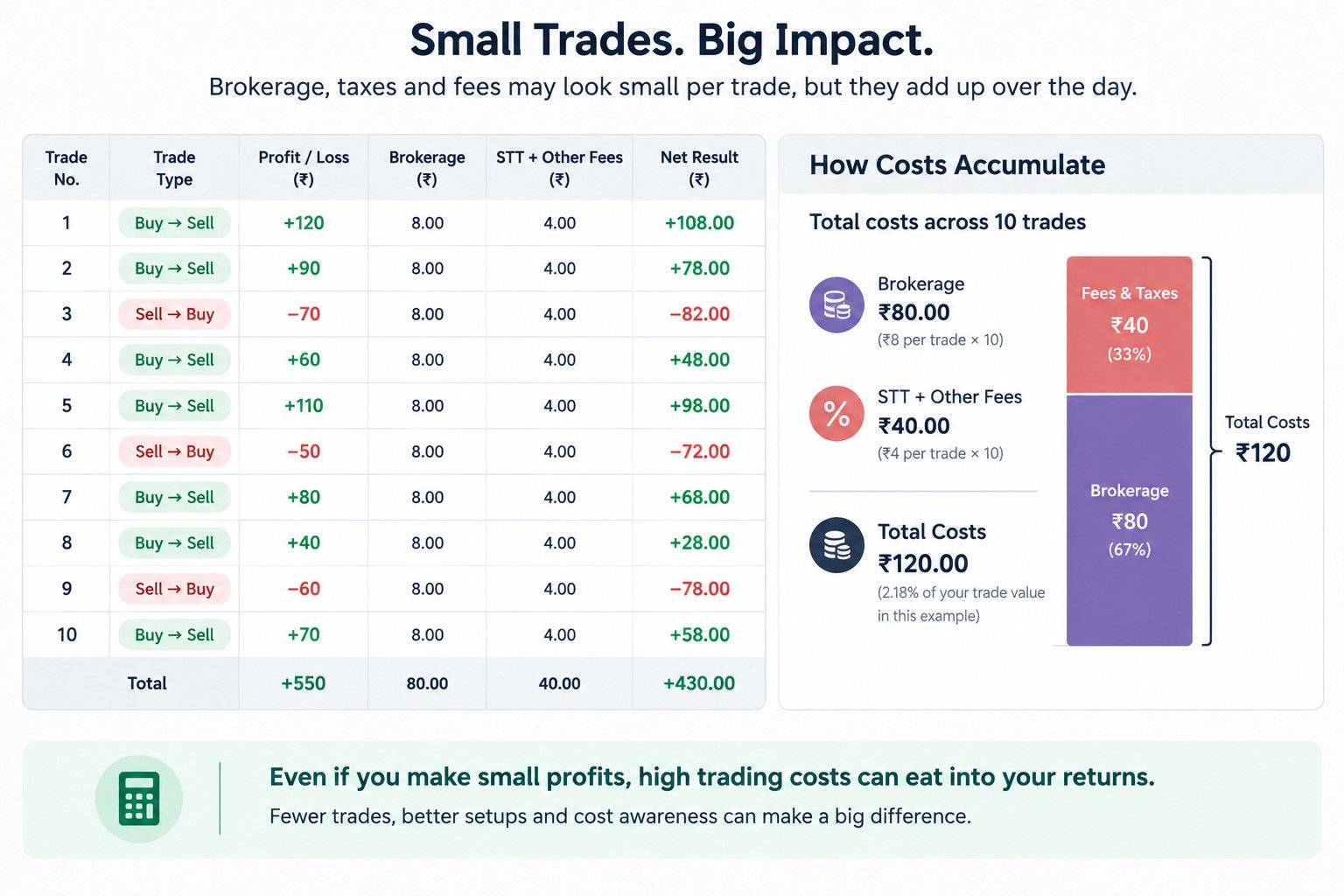
Two forces work against intraday traders that beginners often underestimate. First, leverage: brokers offer higher leverage for intraday trades, which magnifies both gains and losses far beyond the capital used. Second, transaction costs: frequent trading means brokerage, taxes, and fees add up fast, quietly eating into profits even on winning days.
These structural costs are a big reason the majority of retail intraday traders lose money over time. It's not only about being right on direction — it's about being right often enough to overcome leverage risk and accumulated costs.
5. Should Beginners Day-Trade?
Honestly? For most beginners, no — at least not to start. Intraday trading combines the highest speed, the highest leverage, and the highest costs, which is a difficult combination to survive while you're still learning the basics.
A far more sensible path is to first master chart reading and risk management, practise with slower styles like swing trading, and only consider intraday trading once you can consistently manage risk and emotions. If you do pursue it, do so with money you can afford to lose and with proper structured guidance — never by copying tips from social media.
This is educational content only, not investment advice or encouragement to day-trade.