Introduction
Long-term investing is a different discipline from trading — slower, calmer, and driven by the growth of good businesses rather than daily price moves. This module covers the core ideas: compounding, understanding a company, valuation, diversification, mutual funds and SIPs, and the emotional discipline that makes it all work. It's educational only, not investment advice or specific stock recommendations.
1. What Is Long-Term Investing?
Long-term investing means buying quality assets and holding them for years — allowing a business to grow and compound your money over time, rather than trying to profit from short-term price moves.
Where a trader asks 'where will the price go this week?', a long-term investor asks 'will this business be worth more in five or ten years?' It's a fundamentally different discipline — slower, calmer, and driven by the health of the underlying company rather than the daily chart.
2. The Power of Compounding
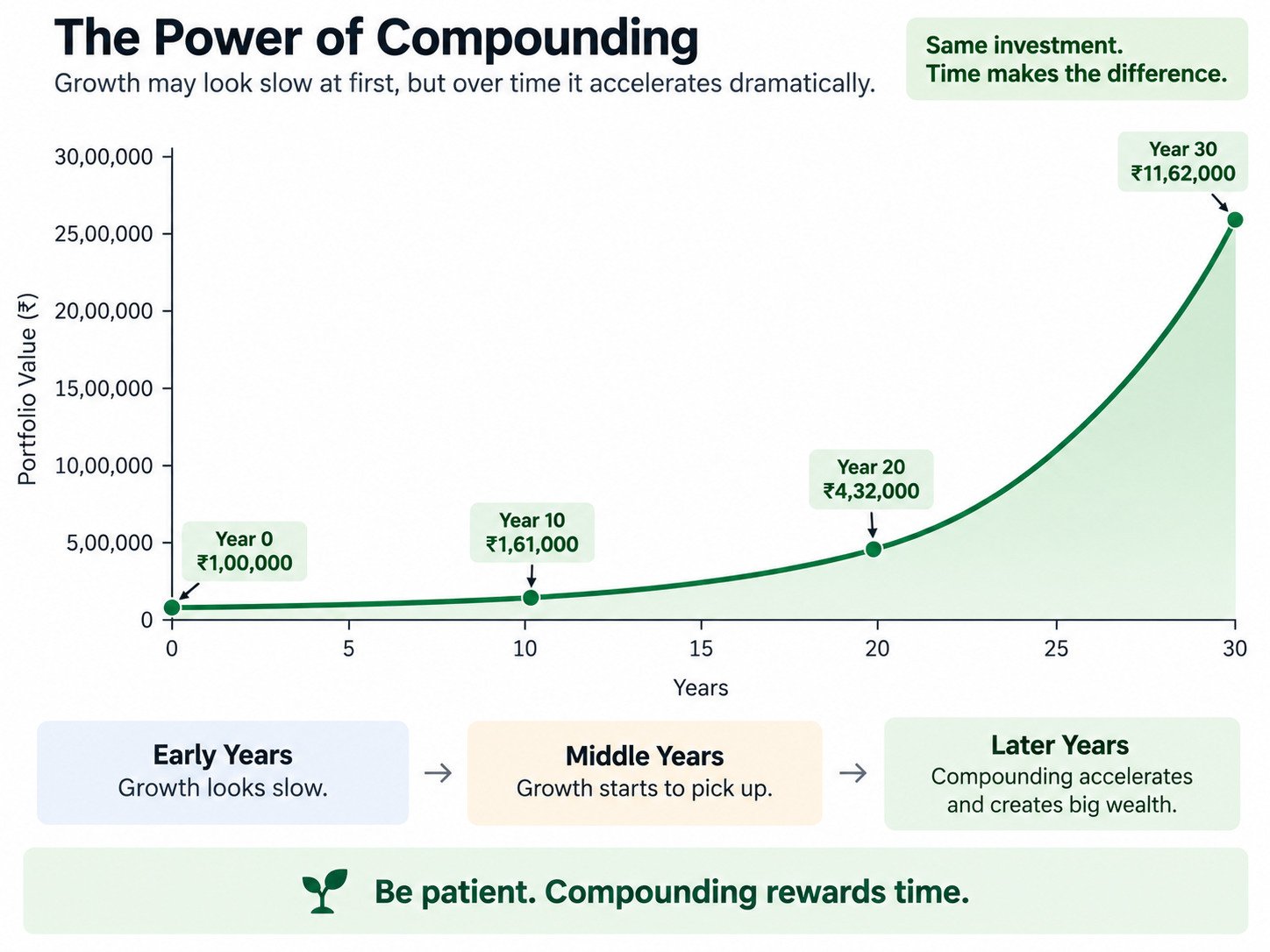
Compounding is the single most important idea in long-term investing. It's the process where your returns themselves start earning returns — money growing on money, year after year.
Its power comes from time, not timing. A modest annual return, left to compound for decades, can grow into something far larger than intuition suggests. This is why starting early — even with small amounts — often matters more than starting big. The longer your money compounds, the more the later years do the heavy lifting.
3. Reading a Company's Financial Health
Long-term investing rewards understanding the business behind the stock. A few basics go a long way: is the company's revenue and profit growing steadily over several years? Does it carry manageable debt? Is it generating real cash, not just accounting profit?
You don't need to be an accountant. A handful of consistent, healthy trends across a few years tells you far more than a single quarter's headline number. The goal is to own good businesses, not just cheap stocks.
4. Understanding Valuation
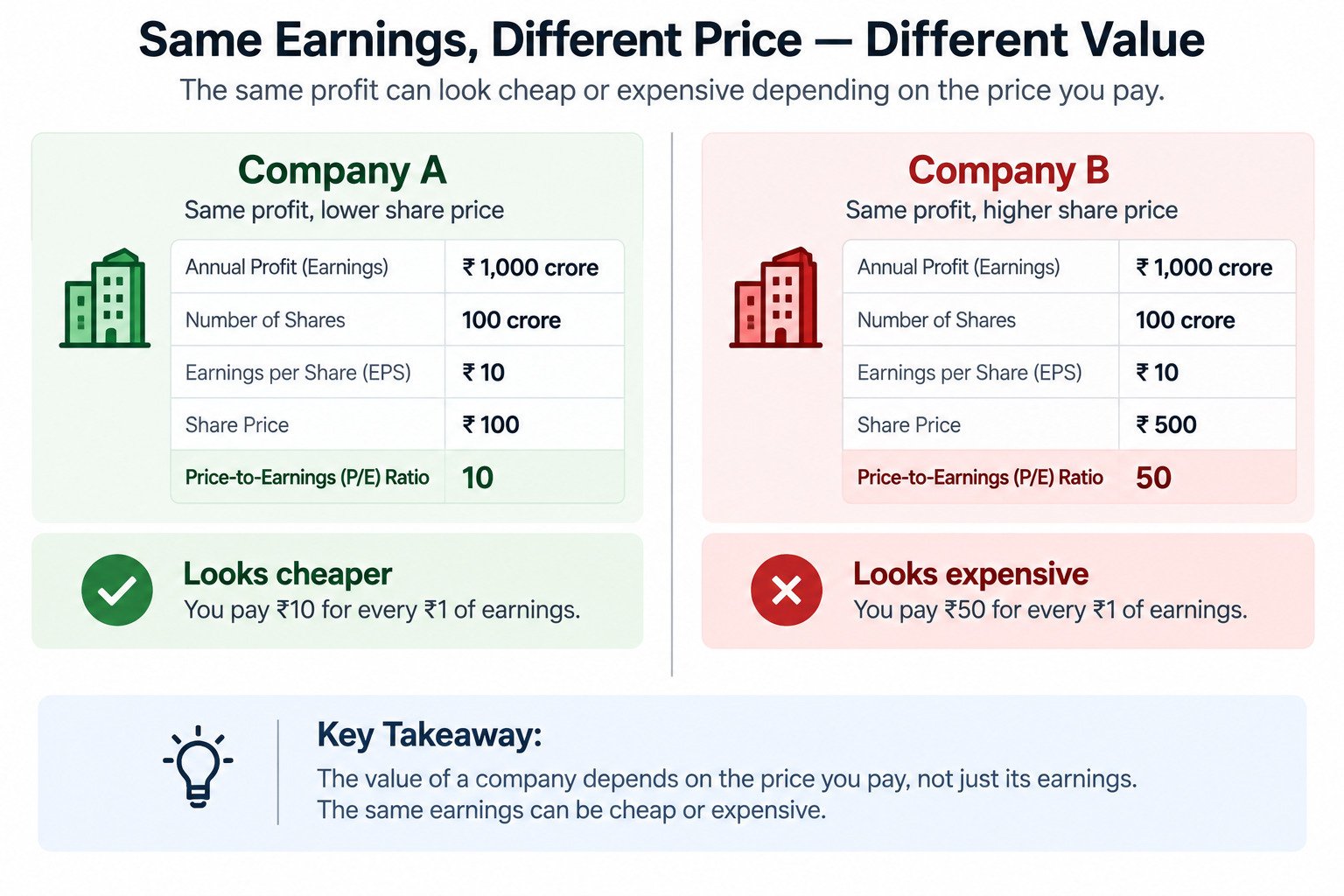
Even a great company can be a poor investment if you pay too much for it. Valuation is about judging whether a stock's price is reasonable relative to what the business actually earns.
A common starting tool is the P/E ratio — how much you pay for each rupee of profit. A high number can mean the stock is expensive, or that the market expects strong growth; a low number can mean it's cheap, or that something's wrong. Valuation is never a single number in isolation — it's always 'compared to what?': the company's own history, and its peers.
5. Building a Diversified Portfolio
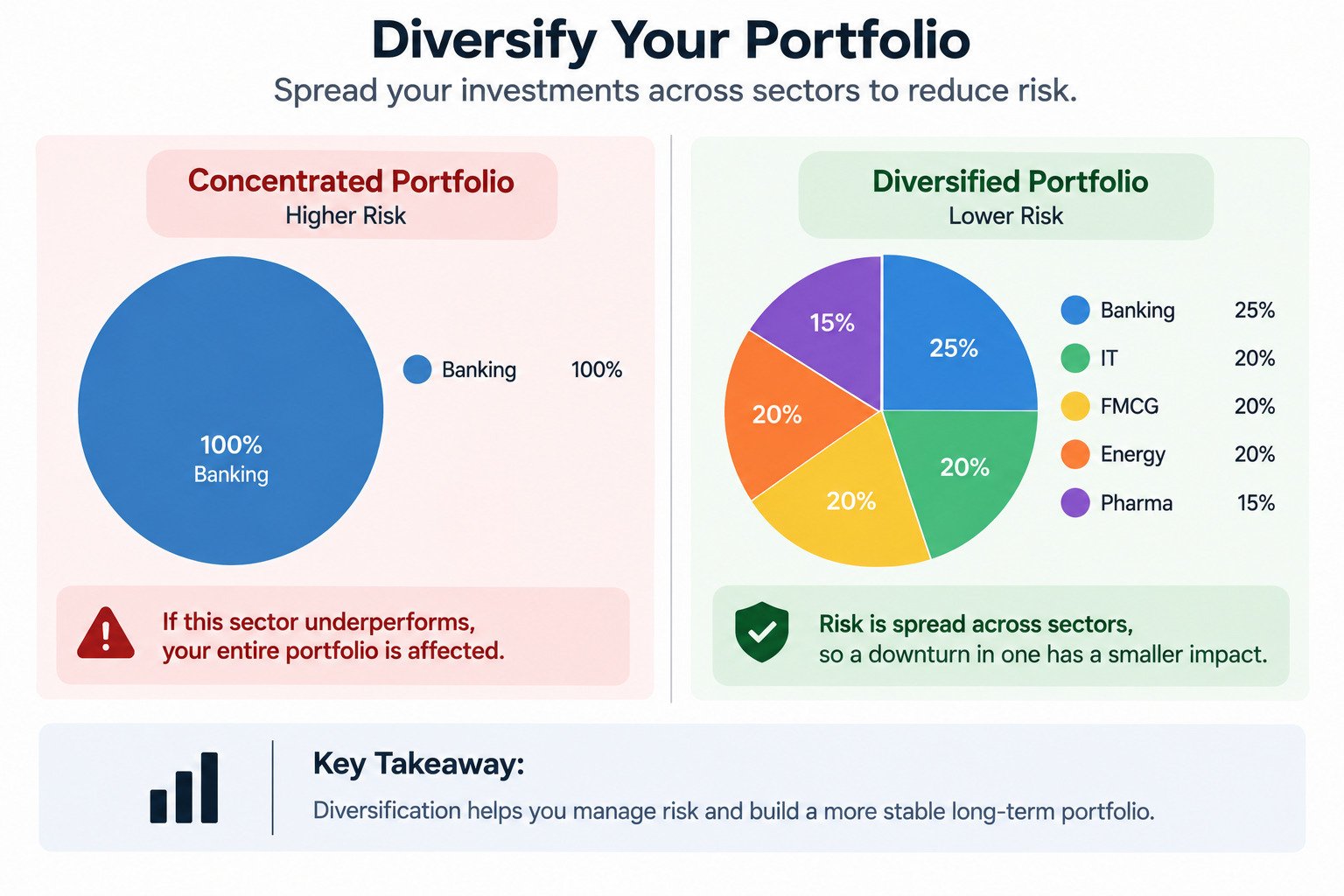
A portfolio is the collection of everything you own. Diversification — spreading your money across different companies, sectors, and sometimes asset types — protects you from any single bad outcome doing serious damage.
The idea isn't to own everything, but to avoid betting your future on one stock or one industry. If one holding disappoints, others can carry the portfolio. For most long-term investors, a sensibly spread portfolio beats concentrated bets over time.
6. Mutual Funds & SIPs
Not everyone wants to pick individual stocks — and they don't have to. A mutual fund pools money from many investors and has a professional manager invest it across many companies, giving instant diversification with a single purchase.
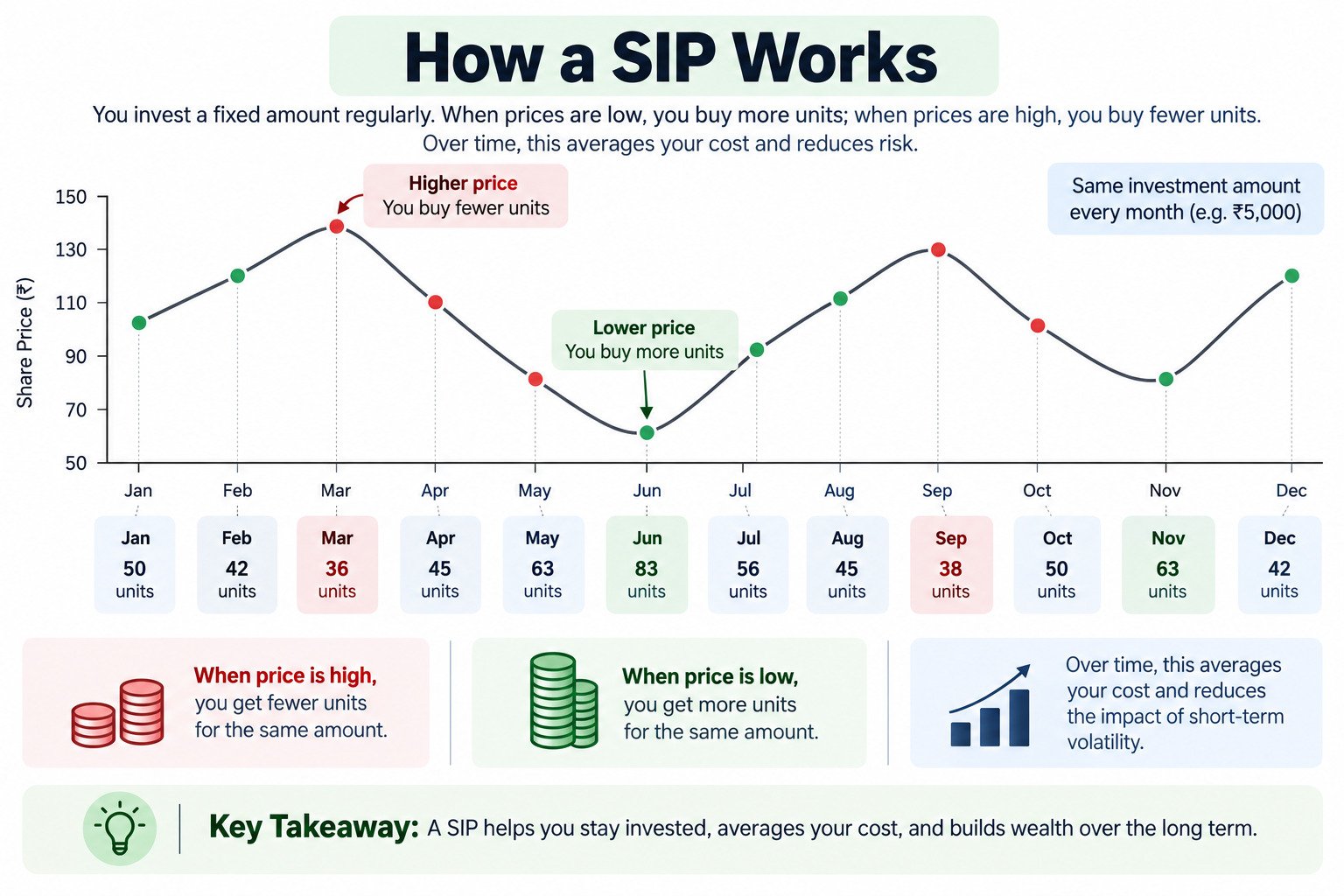
A SIP (Systematic Investment Plan) lets you invest a fixed amount regularly — say monthly — rather than all at once. This builds discipline, and averages out your buying price over time so you're not dependent on timing the market perfectly. For many long-term investors, a SIP into a diversified fund is the simplest sensible starting point.
7. Patience & Emotional Discipline
The hardest part of long-term investing isn't analysis — it's behaviour. Markets fall, sometimes sharply, and the instinct to panic-sell at the bottom has destroyed more wealth than any bad stock pick.
Long-term investors accept that downturns are part of the journey, not a signal to abandon the plan. The discipline to stay invested through the scary periods — and to avoid chasing whatever is hot — is often what separates those who actually earn long-term returns from those who only talk about them.
8. Common Long-Term Investing Mistakes
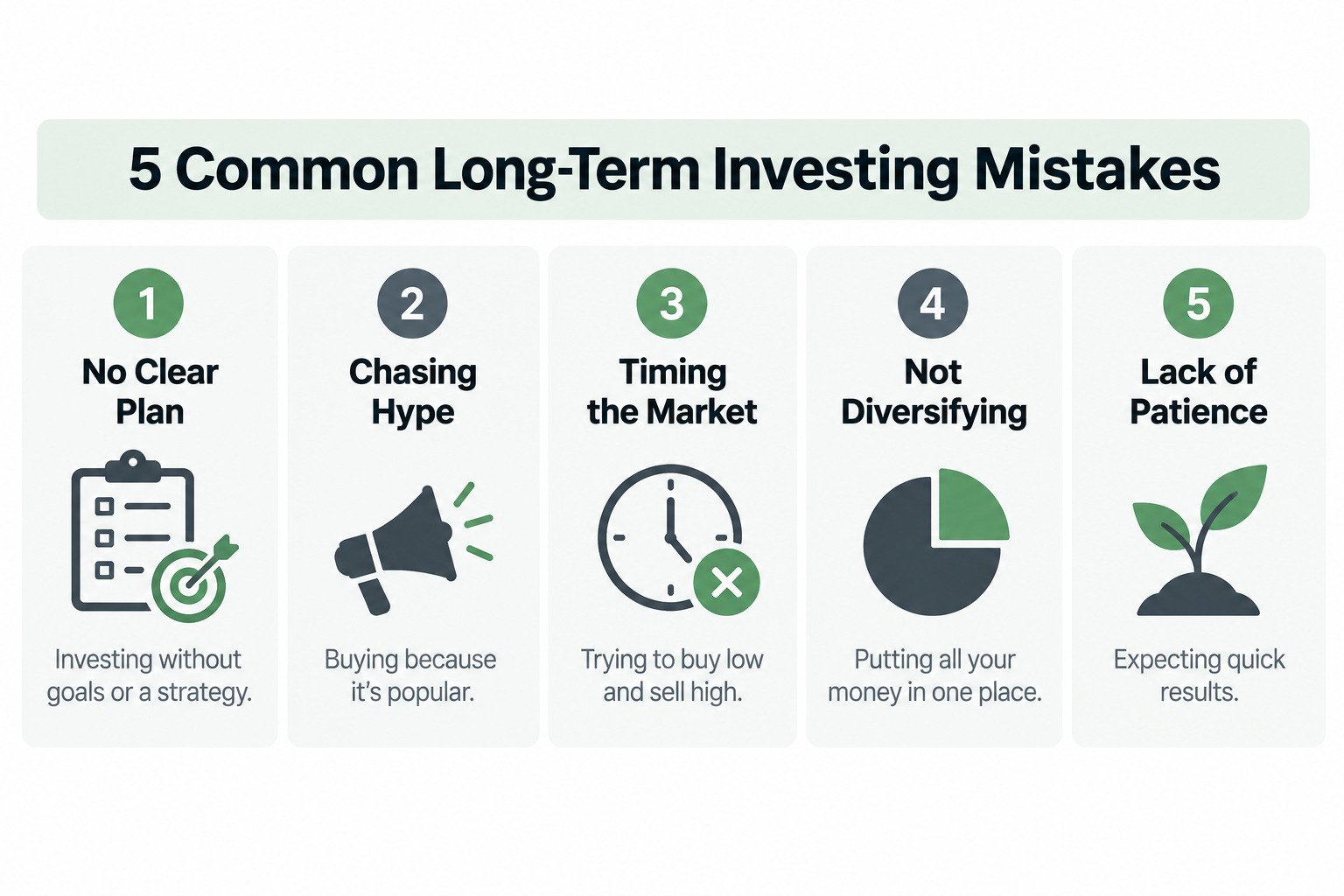
A few mistakes trip up most beginners. Chasing recent winners — buying whatever went up the most last year — often means buying at the top. Panic-selling in downturns locks in losses that would have recovered. Over-checking your portfolio daily turns a long-term plan into a source of short-term stress.
Perhaps the biggest: treating long-term investing like trading — jumping in and out, unable to leave good investments alone to compound. The honest path is to invest in quality, diversify sensibly, and then let time do the work.
This is educational content only, not investment advice.