Introduction
Options are one of the most powerful — and most misunderstood — instruments in the market. This beginner-friendly module explains options from the ground up: what calls and puts are, how buying and selling actually work, the key terms, and an honest look at the real risks. No prior experience needed. Free and open to everyone on Kaapra Campus.
1. What Is an Option?
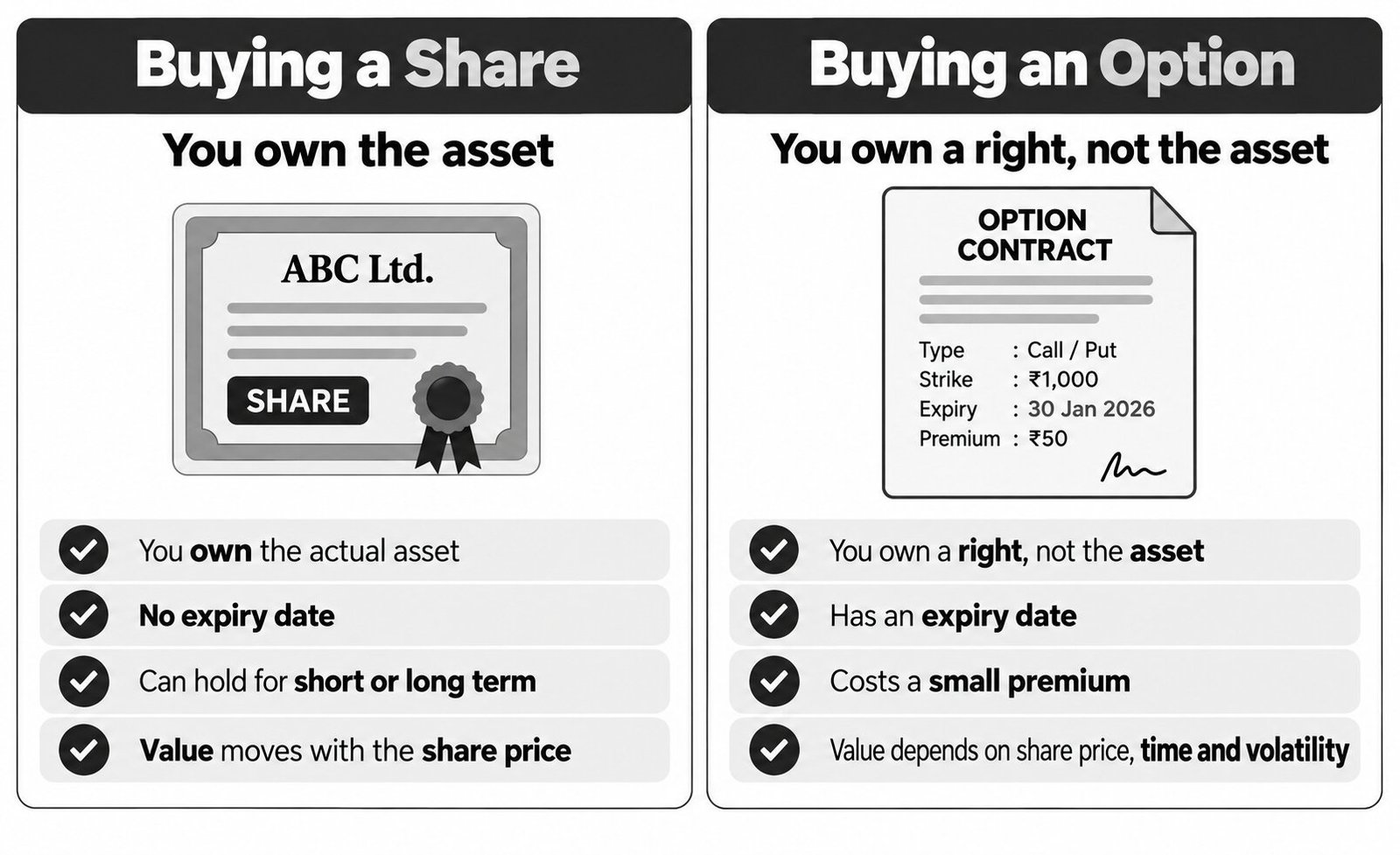
An option is a contract that gives you the right, but not the obligation, to buy or sell an underlying asset (like a stock or an index) at a fixed price, before a fixed date. That single phrase — 'right, not obligation' — is what makes options different from buying shares directly.
You pay a small fee, called the premium, for this right. If the market moves your way, the right becomes valuable; if it doesn't, the most an option buyer can lose is that premium. Options exist so traders can take a view on price movement with a defined, upfront cost.
2. Calls and Puts — The Two Building Blocks
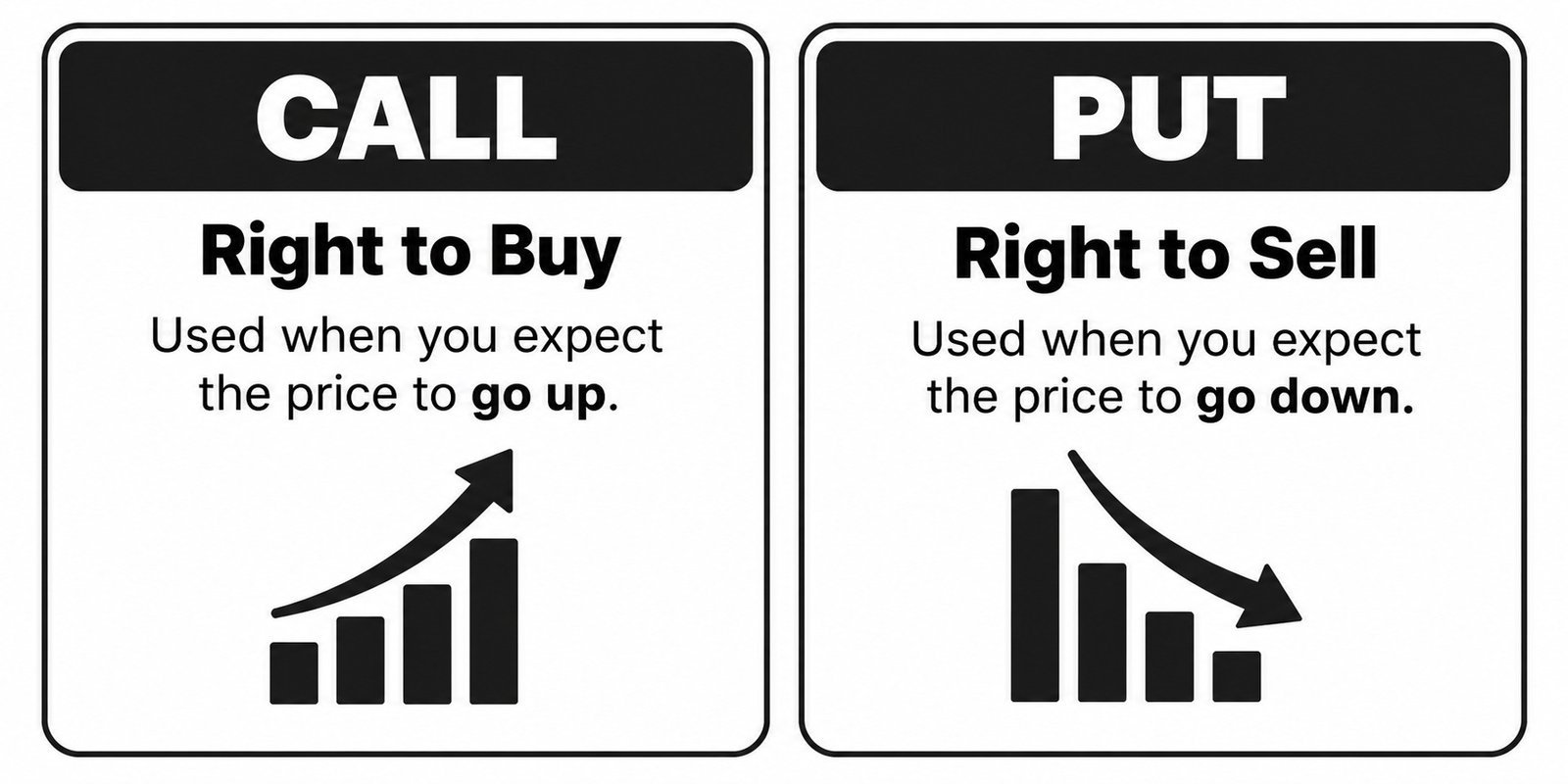
There are only two types of options, and everything else is built from them. A Call option gives you the right to buy — you use it when you expect the price to go up. A Put option gives you the right to sell — you use it when you expect the price to go down.
That's the core. A beginner who deeply understands just 'call = expecting up, put = expecting down' already has the foundation most people skip past.
3. Key Terms — Strike, Premium, Expiry & Lot Size
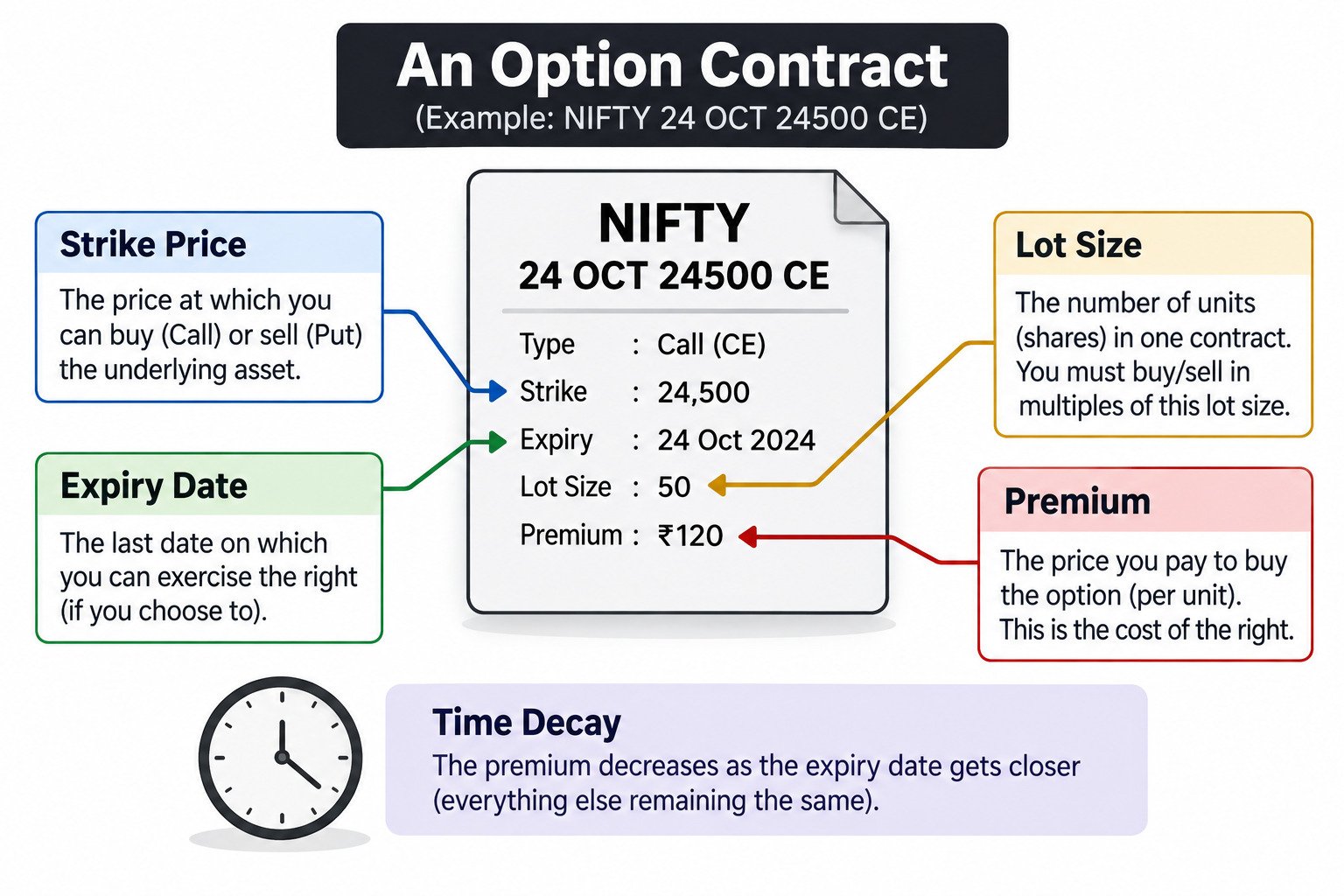
Four terms unlock almost everything. The strike price is the fixed price at which you can buy or sell. The premium is what you pay to hold the option. The expiry is the date the contract ends. The lot size is the fixed quantity per contract — options trade in lots, not single shares.
A crucial beginner reality: an option's premium erodes as expiry approaches. Time is constantly working against an option buyer, even when the underlying price barely moves — a concept called time decay.
4. Options Buying — How It Works
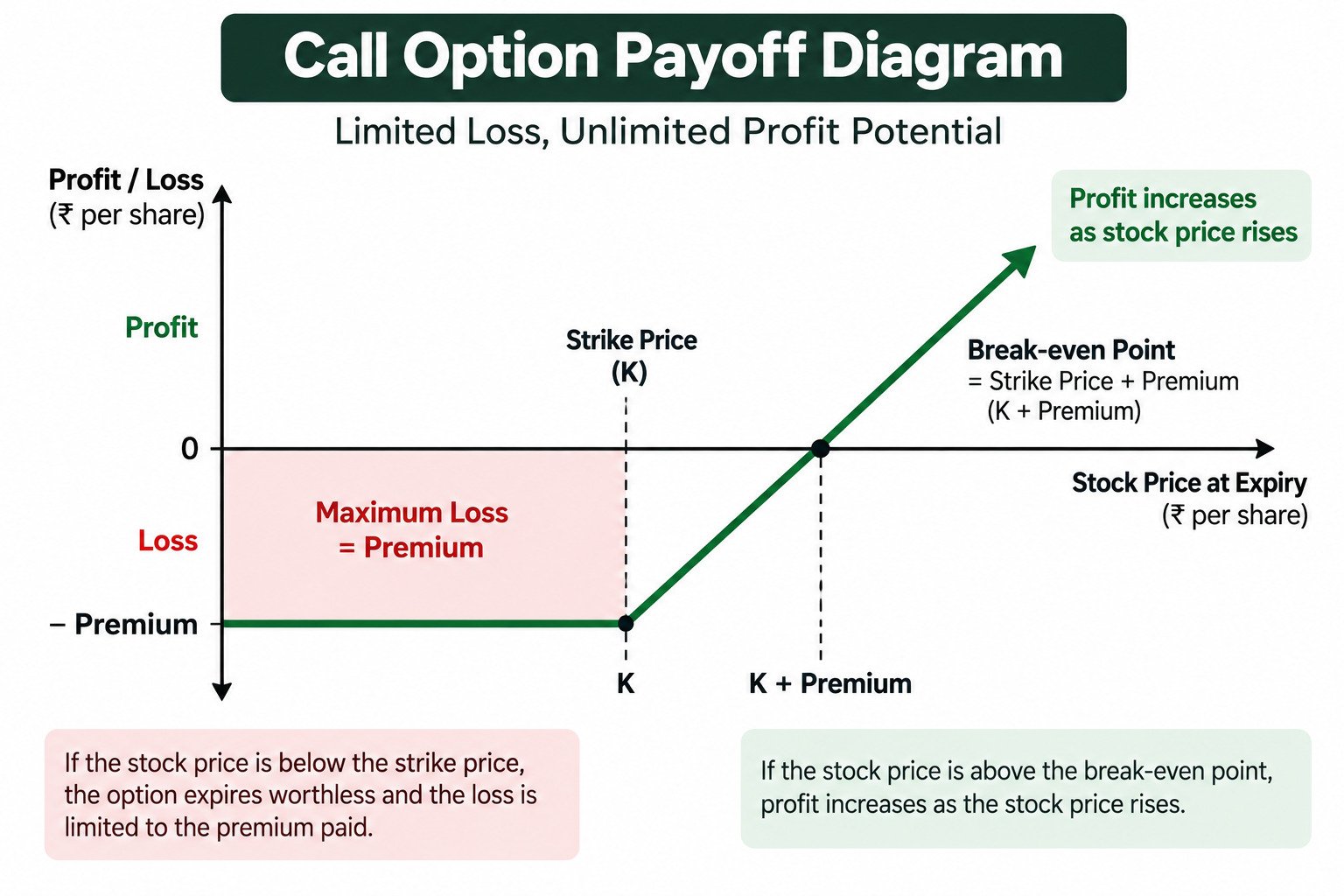
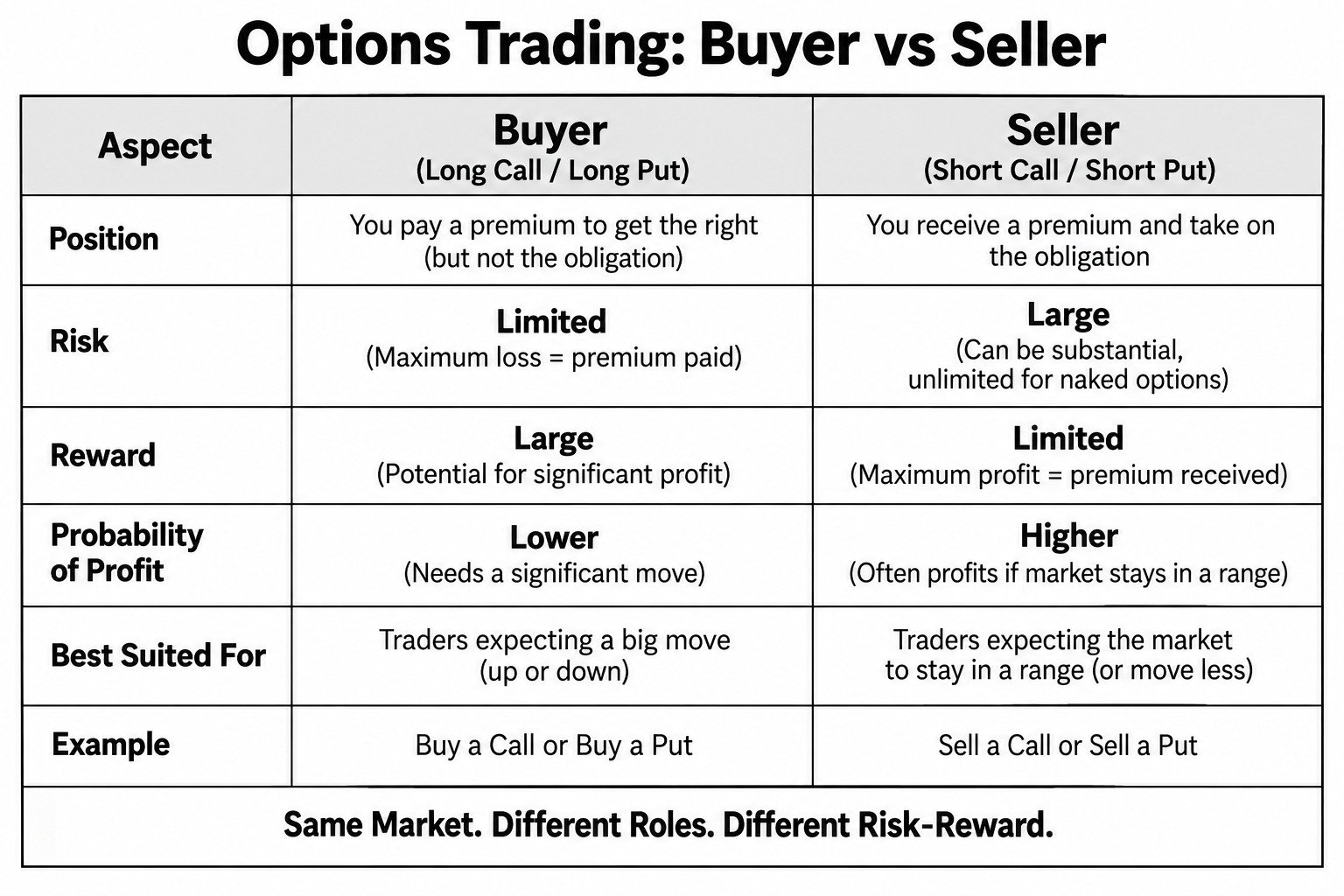
Buying options is the most common entry point for beginners, and for good reason: your risk is limited and known upfront. The maximum you can lose is the premium you paid — no more. The potential gain, if the move is large, can be several times that premium.
The catch is that buyers need the price to move enough, and soon enough, to overcome both the premium paid and time decay. Many beginner buyers are right about direction but still lose, because the move was too small or too slow. Buying rewards conviction plus timing, not just being directionally correct.
5. Options Selling — How It Works
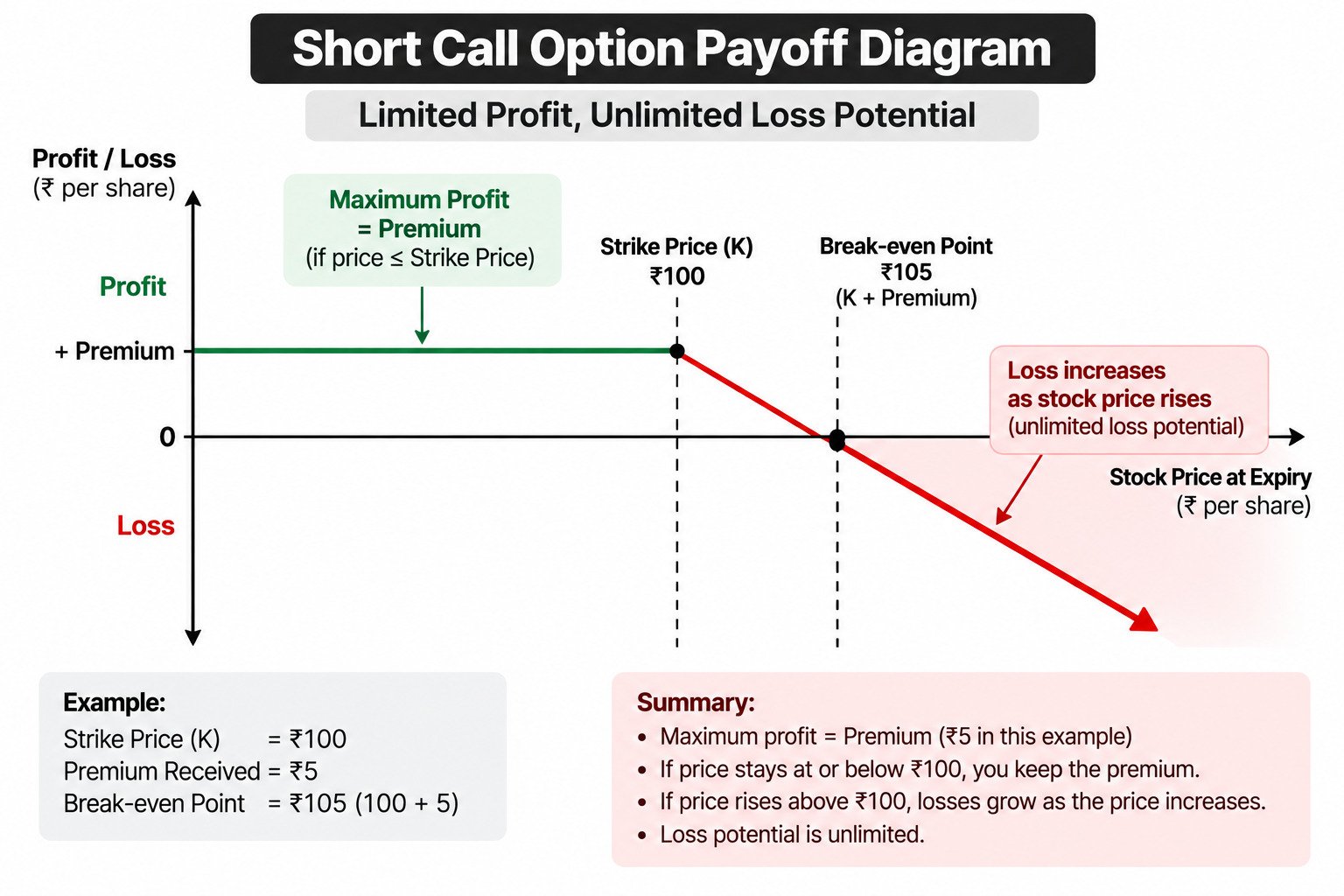
Selling (or 'writing') options is the other side of the trade. The seller receives the premium upfront and profits if the option expires worthless — which, thanks to time decay, happens more often than beginners expect. This is why selling appeals to experienced traders.
But the risk profile is the opposite of buying, and this is critical: an option seller's gain is limited to the premium received, while the potential loss can be very large (theoretically unlimited on a naked call). Selling can offer a higher probability of small wins, paired with the risk of occasional large losses. It demands strict risk management and is not a beginner's starting point.
6. Buyer vs Seller — Risk & Reward Compared
Put simply: the buyer has limited risk and large potential reward, but a lower probability of profit (they need a real move). The seller has limited reward and large potential risk, but a higher probability of profit (they win if not much happens).
Neither is 'better' — they suit different views and skill levels. The honest guidance for a beginner: start by understanding both, practise with buying (defined risk), and treat selling as an advanced step to grow into with proper risk controls.
7. Intrinsic Value, Time Value & Moneyness
An option's premium is made of two parts. Intrinsic value is the real, in-the-money worth right now. Time value is the extra amount reflecting the chance the option gains more value before expiry — this is the part that decays away.
'Moneyness' describes where the strike sits versus the current price: in-the-money (ITM), at-the-money (ATM), or out-of-the-money (OTM). Beginners are often drawn to cheap OTM options without realising they're paying pure time value that erodes fast — a common, costly mistake.

8. The Real Risks — and Honest Guidance for Beginners
Options are powerful, but they are where a large share of retail traders lose money — and the reasons are structural, not bad luck. Leverage magnifies losses as fast as gains. Time decay steadily drains buyers. Option selling can carry outsized losses. And the low cost of entry quietly encourages overtrading.
Honest path for a beginner: learn the concepts thoroughly first, understand risk before reward, practise with small, defined-risk positions, and never trade with money you can't afford to lose. Options are a tool to respect, not a shortcut to riches.
This is educational content only, not investment advice or a recommendation to trade options.