Introduction
Personal finance is the foundation beneath everything else on Kaapra Campus. Before charts, trades, or investments, this module covers how to manage money wisely — budgeting, saving, handling debt, protecting yourself, and building the stable base that makes investing safe. Free and open to everyone, no background needed.
1. What Personal Finance Really Means
Personal finance is simply how you manage the money that comes in and goes out of your life — earning, spending, saving, protecting, and growing it. It isn't about being an expert; it's about having a clear, honest picture of where you stand and where you're headed.
Before anyone thinks about the stock market, this is the real foundation. A person who earns modestly but manages money well ends up far more secure than a high earner with no control over their finances.
2. Budgeting — Knowing Where Your Money Goes
A budget is not about restriction — it's about awareness. Most people are genuinely surprised when they first track a full month of spending, because money leaks out in small, forgotten ways.
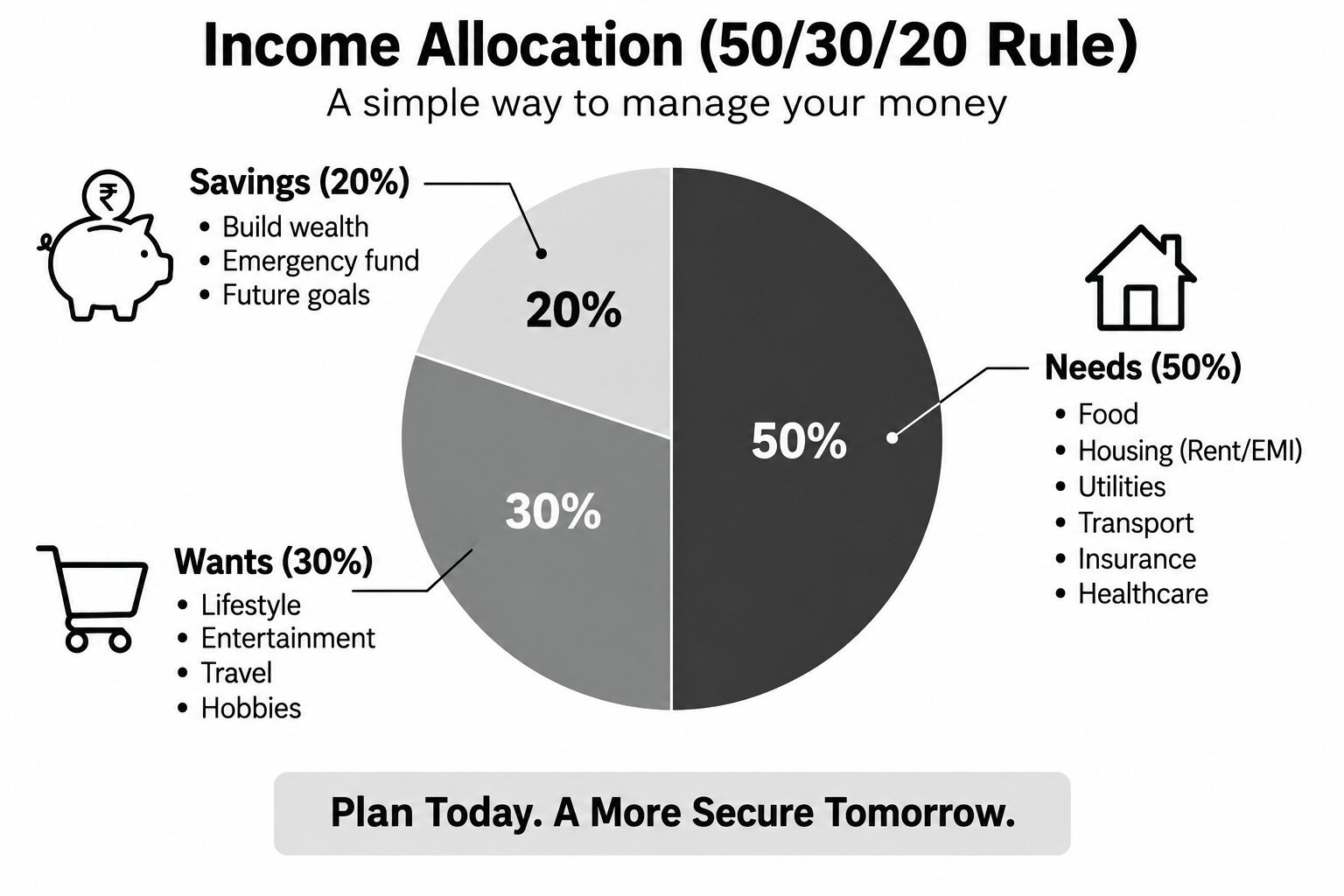
A simple, widely-used starting framework is to divide income into needs, wants, and savings — for example, roughly half toward essentials, a portion toward lifestyle, and a meaningful slice set aside before anything else. The exact split matters less than the habit of deciding on purpose rather than by accident.
3. Building an Emergency Fund
An emergency fund is money set aside purely for genuine emergencies — a job loss, a medical bill, an urgent repair. Its job is to keep one bad month from turning into a financial crisis or forcing you into debt.
A common guideline is to build up three to six months of essential expenses, kept somewhere safe and easily accessible — not invested in the market, where its value could fall exactly when you need it. This fund is what lets you invest calmly later, because you're not one surprise away from having to sell in a panic.
4. Understanding and Managing Debt
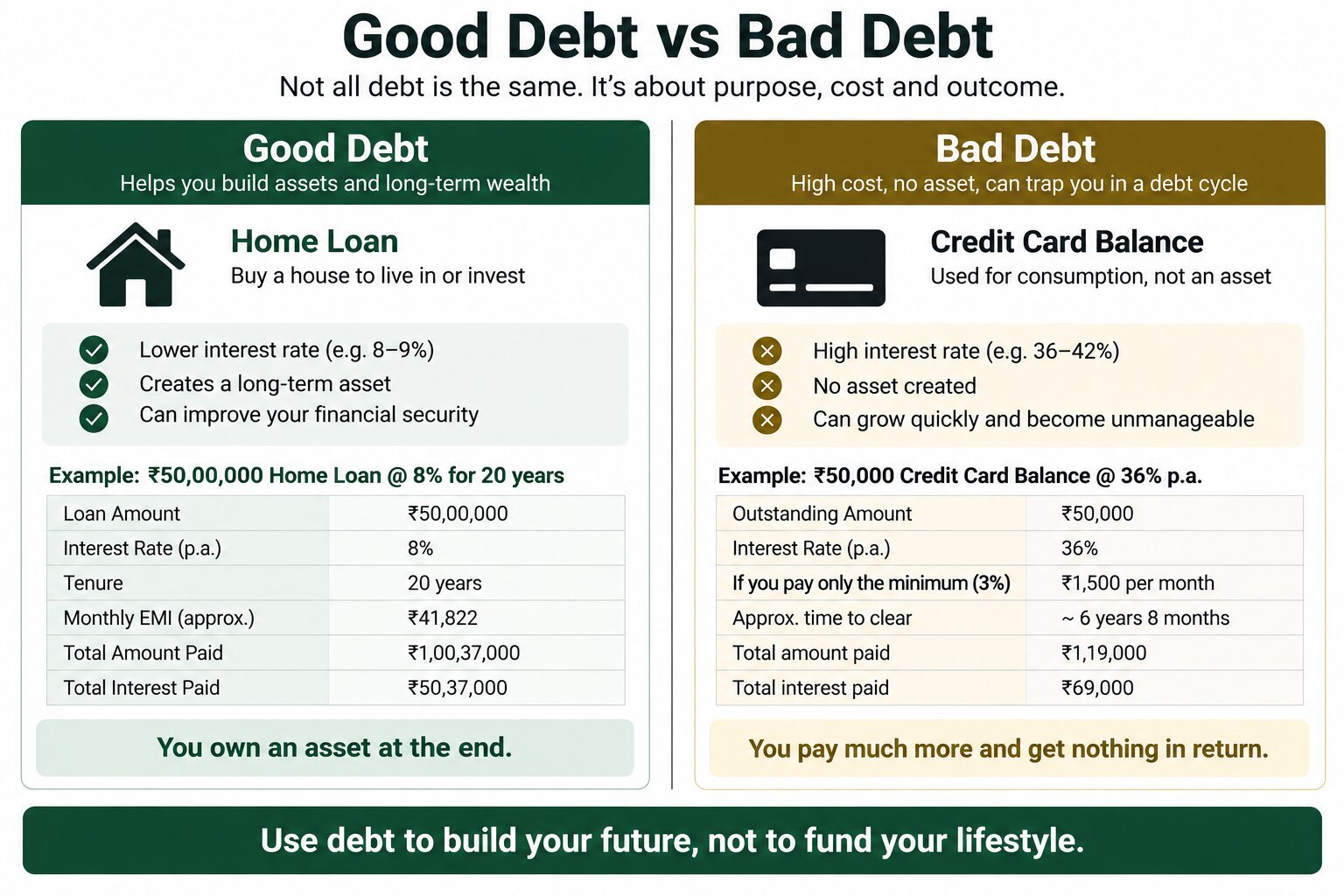
Not all debt is equal. A home loan at a reasonable rate is very different from high-interest credit-card debt that quietly compounds against you every month.
The priority order is usually simple: clear high-interest debt first (credit cards, personal loans), because no investment reliably beats the interest such debt charges you. Getting out from under expensive debt is often the highest-return 'investment' a person can make — guaranteed, and risk-free.
5. Insurance — Protecting What You Have
Insurance is not an investment — it's protection. Its purpose is to make sure a single large, unexpected event doesn't wipe out years of careful saving.
The two most essential for most people are health insurance (medical costs are a leading cause of financial distress) and term life insurance if others depend on your income. A key principle: keep insurance and investment separate — mixing them usually gives you poor cover and poor returns at the same time.
6. The Power of Saving Early
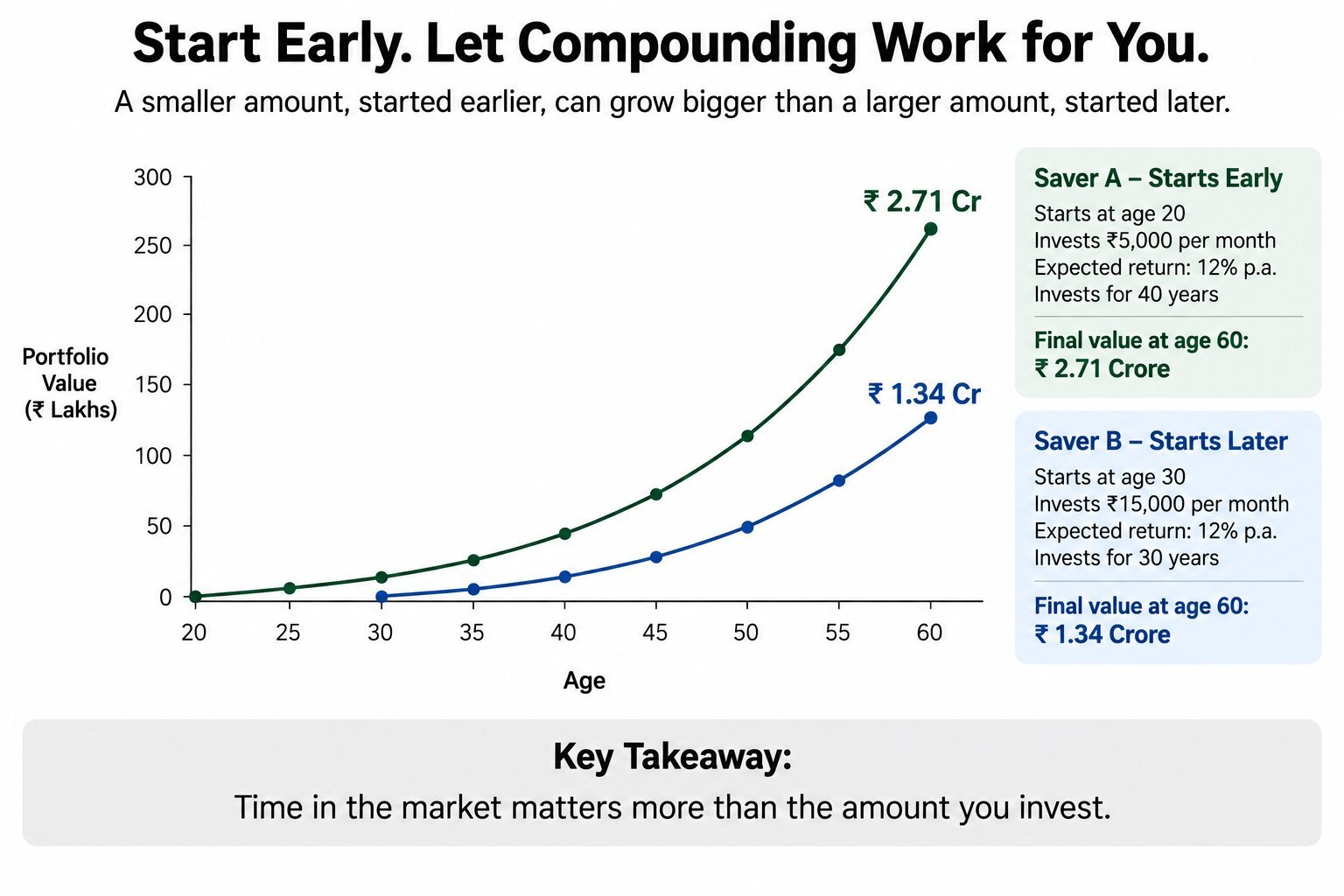
Time is the single most powerful force in personal finance. Because of compounding, money saved in your twenties can grow into far more than the same amount saved a decade later — the early years do a surprising amount of the heavy lifting.
This is why starting small but starting early beats waiting until you can save a large amount. A modest, regular saving habit, left to compound over years, is how ordinary people build real wealth — no timing or luck required.
7. From Saving to Investing — The Next Step
Once your budget is in control, your emergency fund is built, expensive debt is cleared, and you're insured — then investing becomes a calm, sensible next step rather than a gamble. Investing is simply putting your surplus to work so it grows faster than it would sitting idle.
This is where the rest of Kaapra Campus picks up — from mutual funds and long-term investing to learning the markets directly. But the order matters: a strong personal-finance foundation is what makes investing safe rather than stressful. This is educational content only, not financial advice.
This is educational content only, not investment advice or a recommendation for personal finance.