Introduction
Swing trading sits between fast intraday trading and long-term investing — holding positions for a few days to a few weeks to capture a meaningful move. It suits people who can't watch screens all day but still want to actively trade. This module covers what swing trading is, how to find and manage trades, and the discipline it genuinely requires. It's educational only, not a set of buy/sell recommendations.
1. What Is Swing Trading?
Swing trading aims to capture a single 'swing' in price — a move that typically plays out over several days to a few weeks. Unlike intraday trading, positions are held overnight; unlike long-term investing, they're not held for months or years.
The appeal is practical: it doesn't demand watching the screen every minute. You can analyse after market hours, place your trade, and manage it with far less screen time than day trading requires — which is why it suits people with jobs or businesses.

2. Finding a Swing Trade Setup
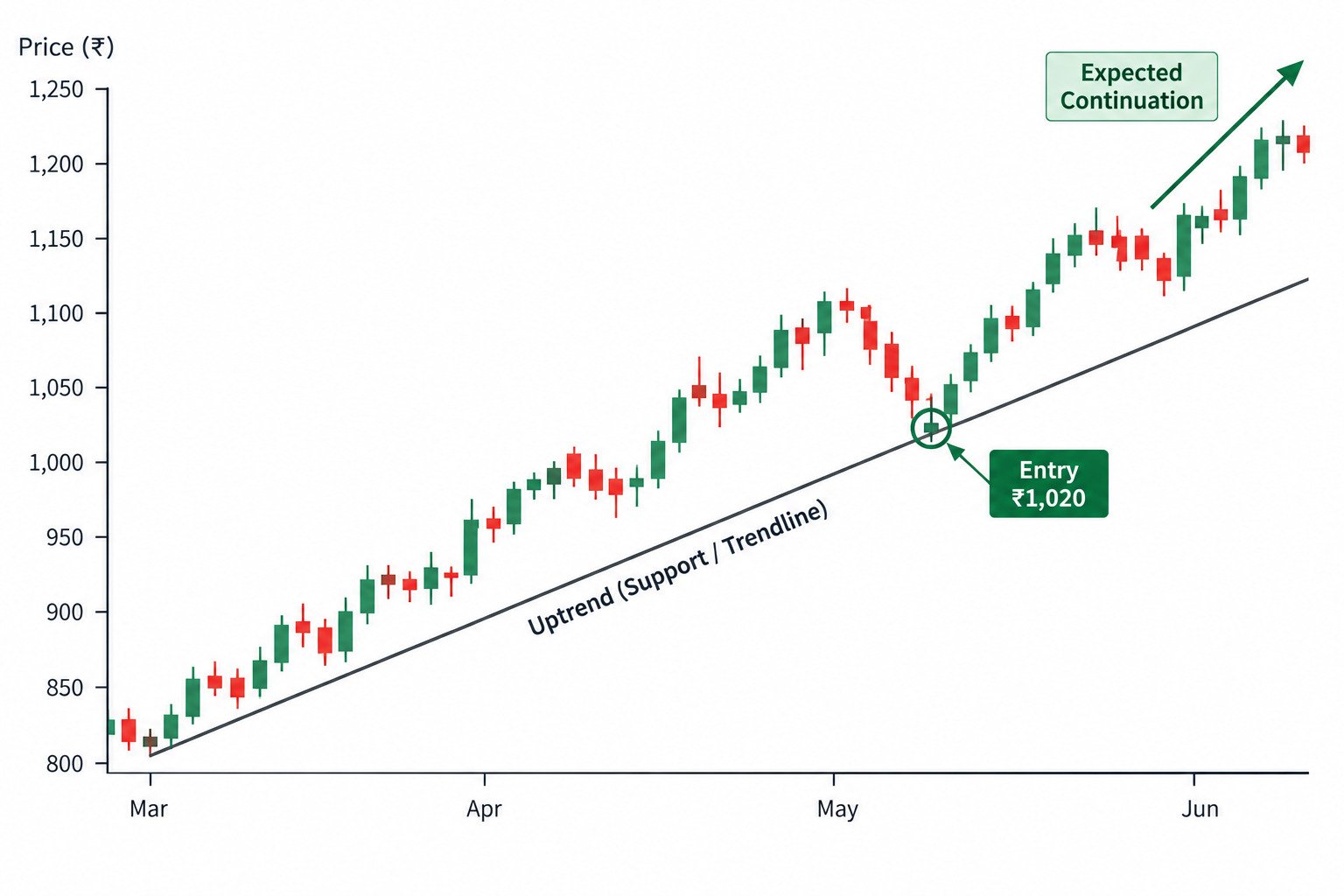
Most swing setups start with the same foundation you'd learn in technical analysis: a clear trend, a key support or resistance level, and confirmation from price action or volume.
A common approach is to enter on a pullback — when a stock in an uptrend dips back toward support — rather than chasing it at the top. The idea is to buy closer to a level where risk is defined and the trend is likely to resume, not to buy after a big move has already happened.
3. Entries, Exits & Holding Period
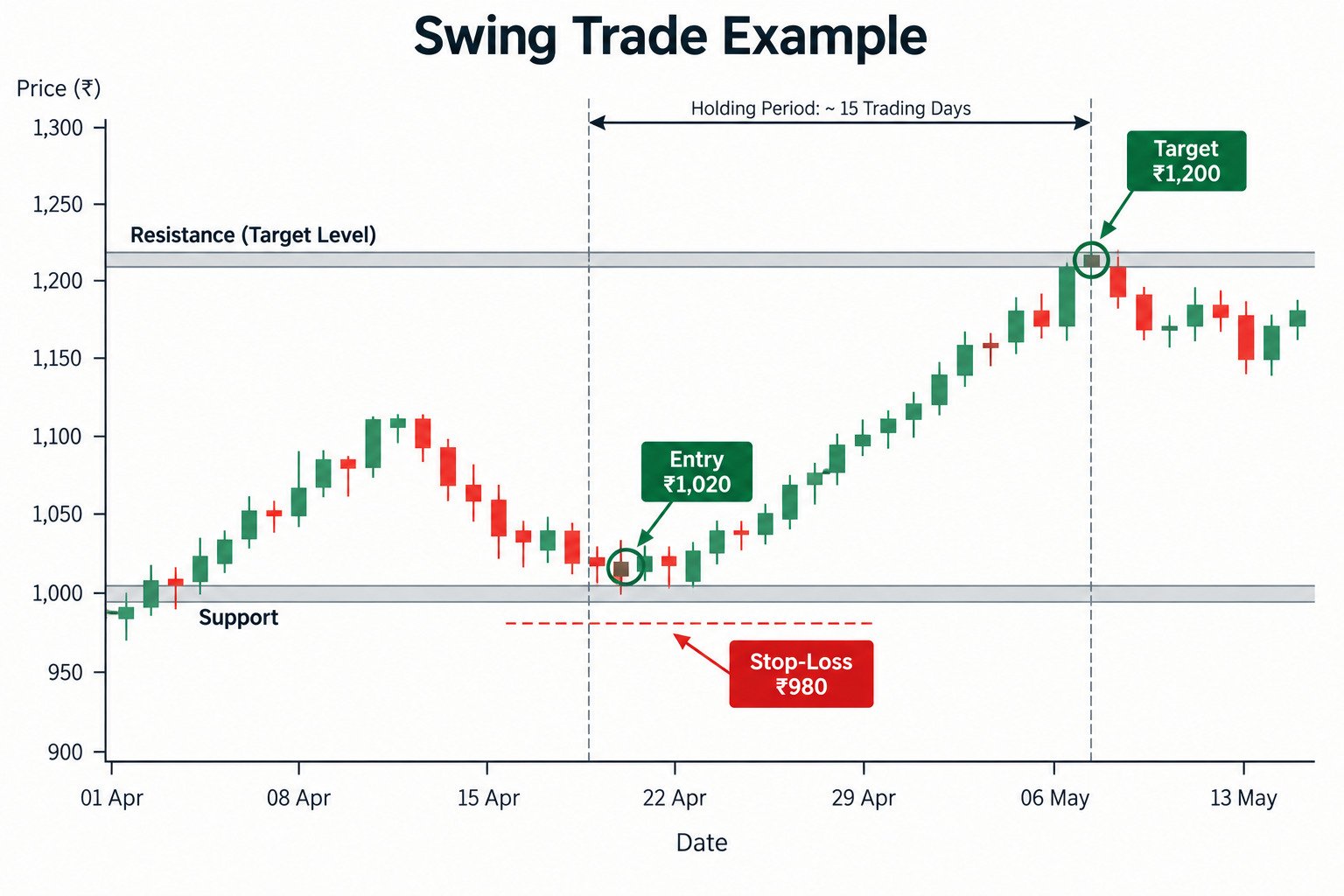
A swing trade needs three decisions made before entering: where you get in, where you exit if wrong (stop-loss), and where you take profit (target). Deciding these in advance removes emotion from the moment.
Holding period is a judgement, not a fixed rule — you exit when your target is hit, your stop is triggered, or the reason you entered no longer holds. Swing traders resist the urge to exit early out of nervousness or to hold too long out of greed.
4. Managing Overnight Risk
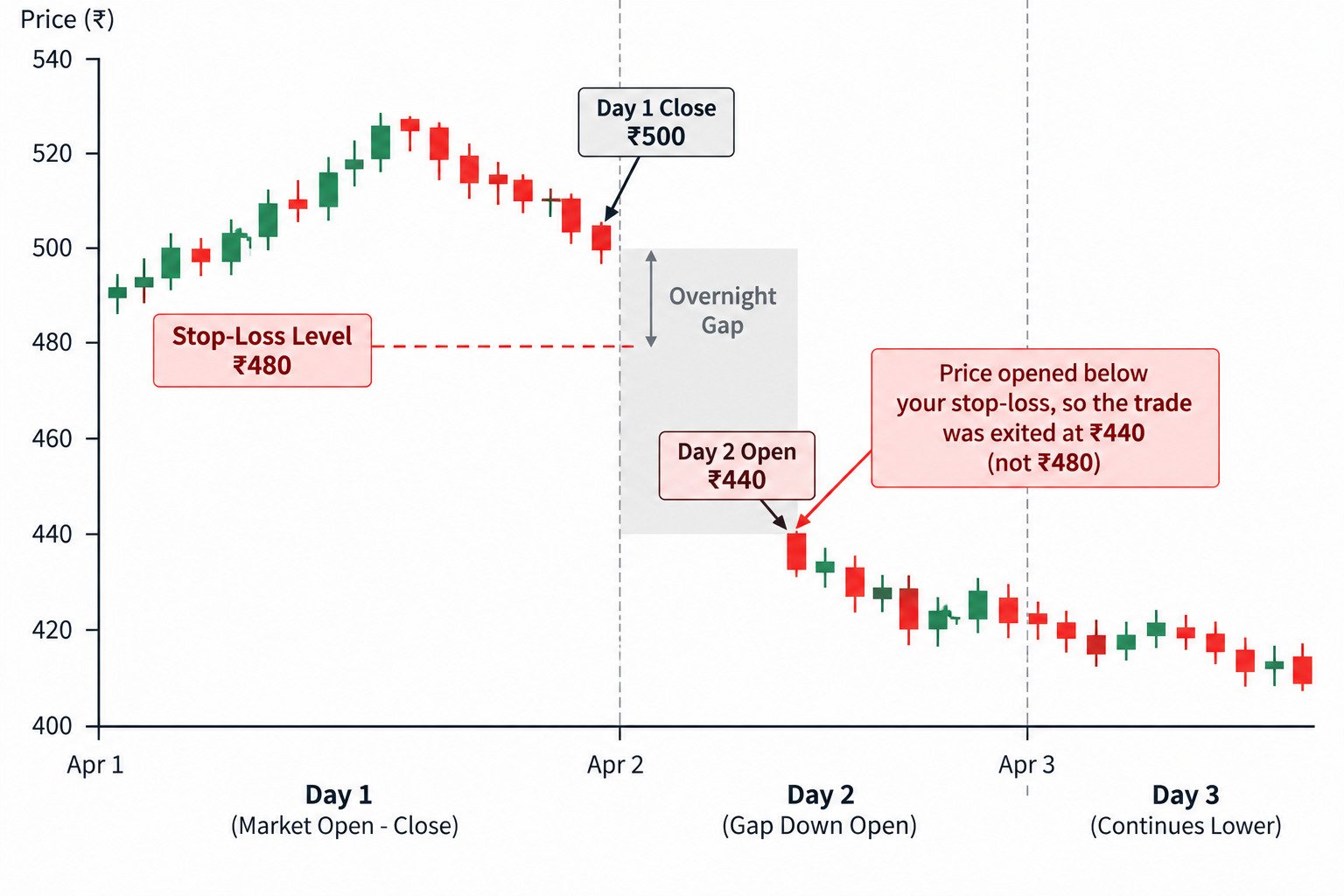
Because swing trades are held overnight, they carry a risk intraday traders avoid: gaps. News, results, or global events after market hours can cause a stock to open sharply higher or lower than it closed — sometimes past your stop-loss.
This is why position sizing matters even more in swing trading. Risking only a small, fixed portion of capital per trade means an occasional bad gap is survivable, not catastrophic. Some swing traders also avoid holding through known high-risk events like earnings announcements.
5. Is Swing Trading Right for You?
Swing trading fits people who want to be active in the market but can't (or don't want to) watch it all day. It rewards patience and planning over speed and reflexes.
It's not effortless — it still requires learning to read charts, managing risk, and controlling emotions through multi-day holds where a position can move against you before it works. As with everything in Kaapra Campus, the honest path is to build the foundations first (chart reading, risk management) before putting real money to work.
This is educational content only, not investment advice.