Introduction
Before you can analyse any stock, you need to be able to read what a chart is actually showing you. This short introduction sets up the three building blocks — chart types, candlesticks, and volume — that every other module in Kaapra Campus builds on.
1. What Is a Chart?
A stock chart is simply a visual record of price over time. Every chart has two axes — time along the bottom, price along the side — and everything else in technical analysis is built on reading how price has moved across that grid.
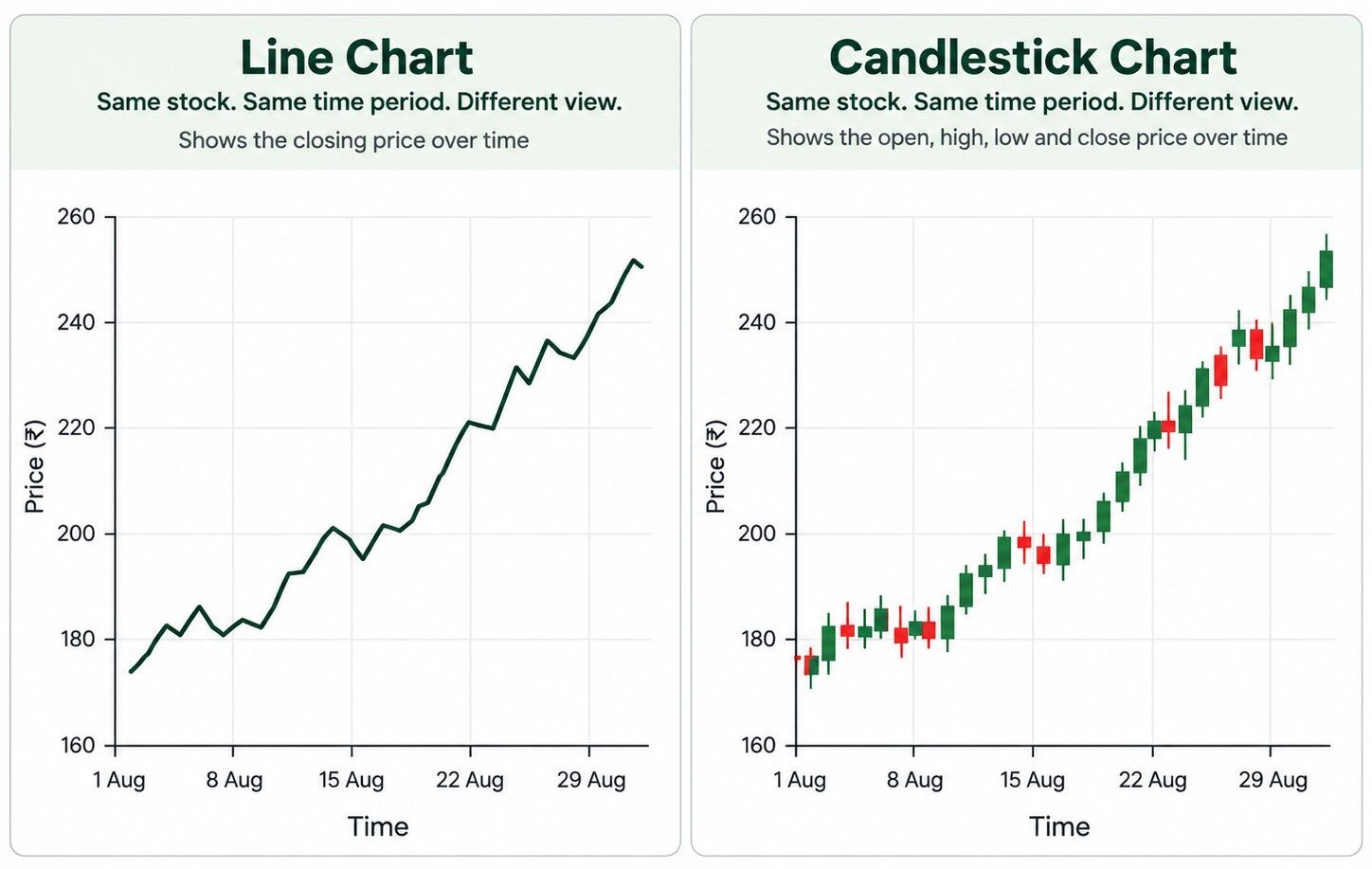
Line charts connect closing prices with a single line — simple, but they hide a lot of detail. Candlestick charts (the ones you'll see used almost everywhere in this course) show the open, high, low, and close for each time period, giving you far more information about what actually happened during that candle.
2. Candlestick Anatomy
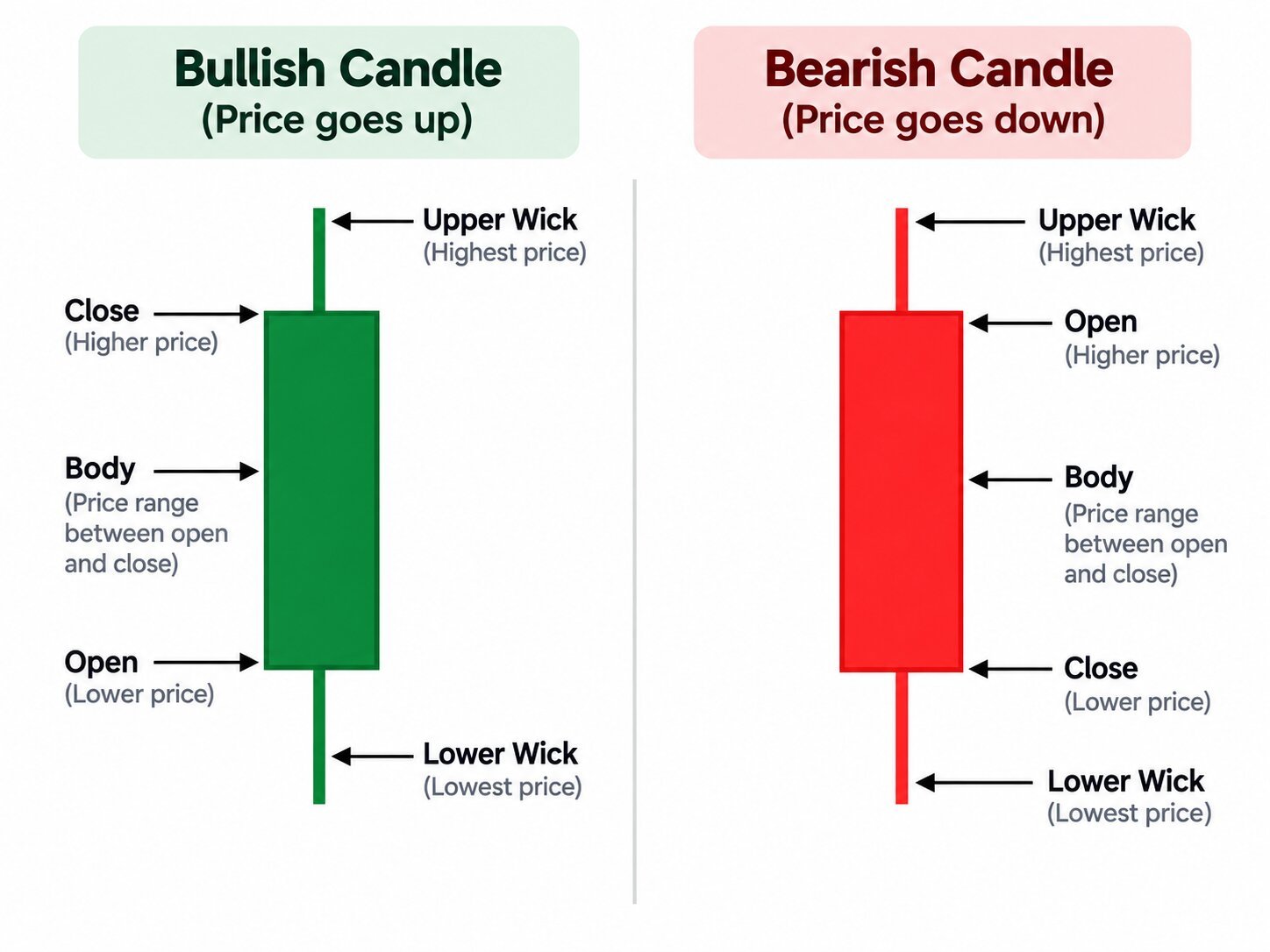
Every candlestick has a 'body' (the thick part, showing the range between open and close) and 'wicks' or 'shadows' (the thin lines above and below, showing the full high-low range).
A green/white candle means the close was higher than the open — buyers were in control. A red/black candle means the close was lower than the open — sellers had the upper hand. Reading a single candle tells you who won that round.
3. Volume Basics
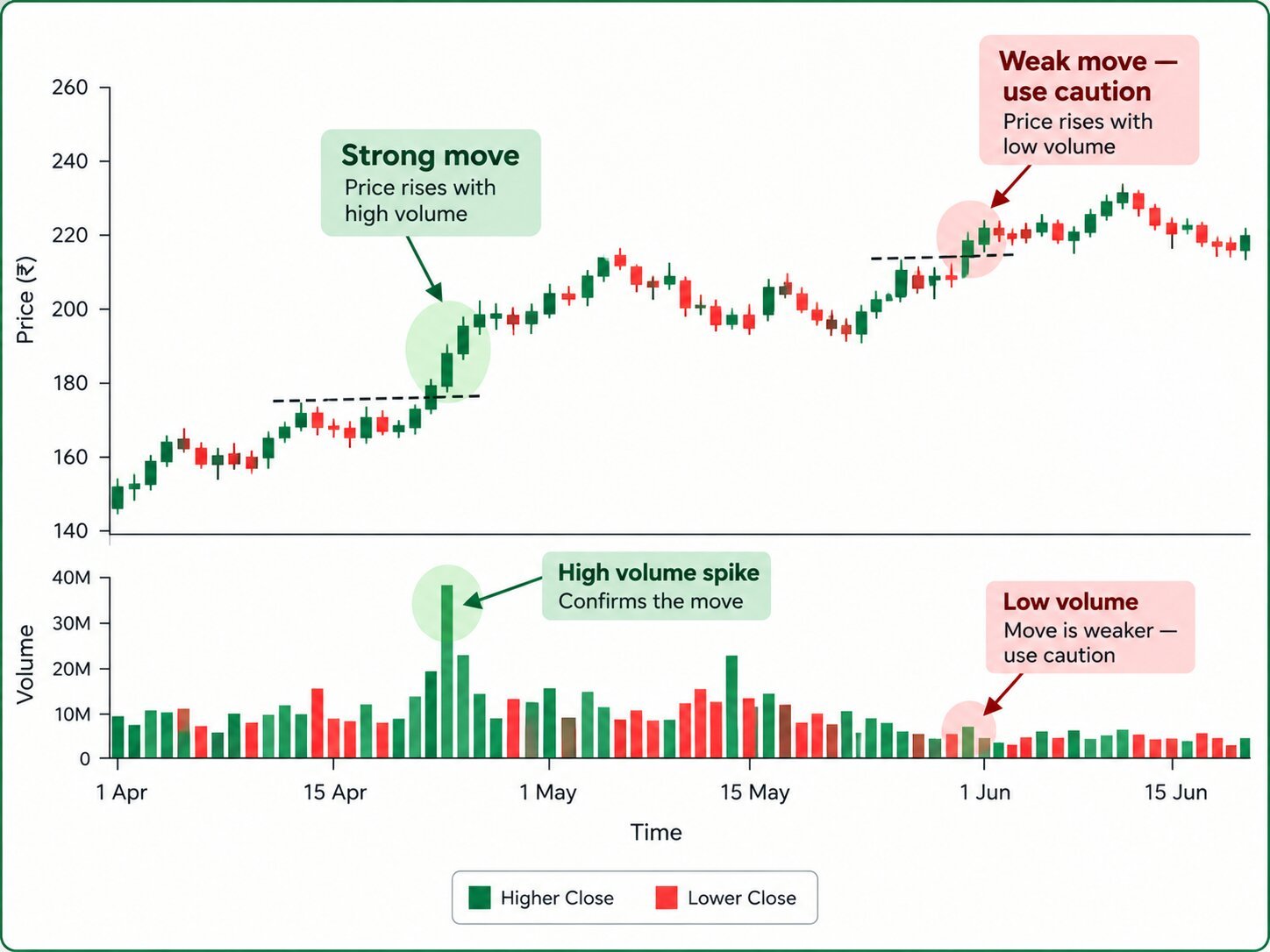
Volume tells you how many shares changed hands in a given period — it's the second dimension beginners usually ignore. A price move on high volume carries real conviction; the same move on low volume is far less trustworthy.
A simple rule: rising price with rising volume confirms strength. Rising price with falling volume is a warning sign that the move may not last.