Introduction
Everything covered so far comes together here. This module walks through the practical mechanics of actually placing and managing a trade — both intraday and position-style — using the concepts from every module before this one.
1. Pre-Trade Checklist
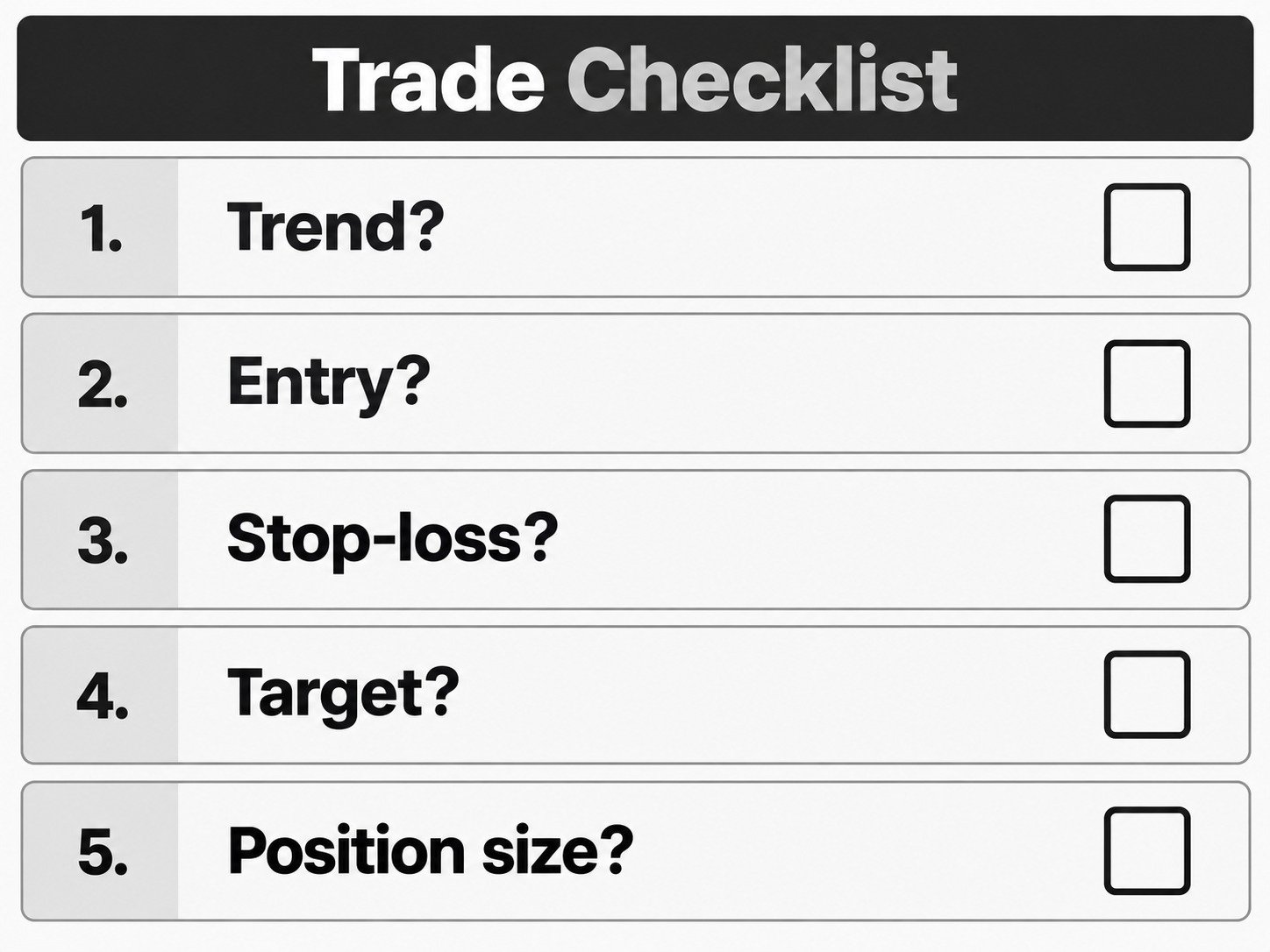
Before entering any trade, a simple checklist helps remove emotion from the decision: what's the trend? Where's my entry? Where's my stop-loss? What's my target? What's my position size?
If you can't answer all five clearly before entering, that's a sign to wait rather than act.
2. Market vs Limit Orders
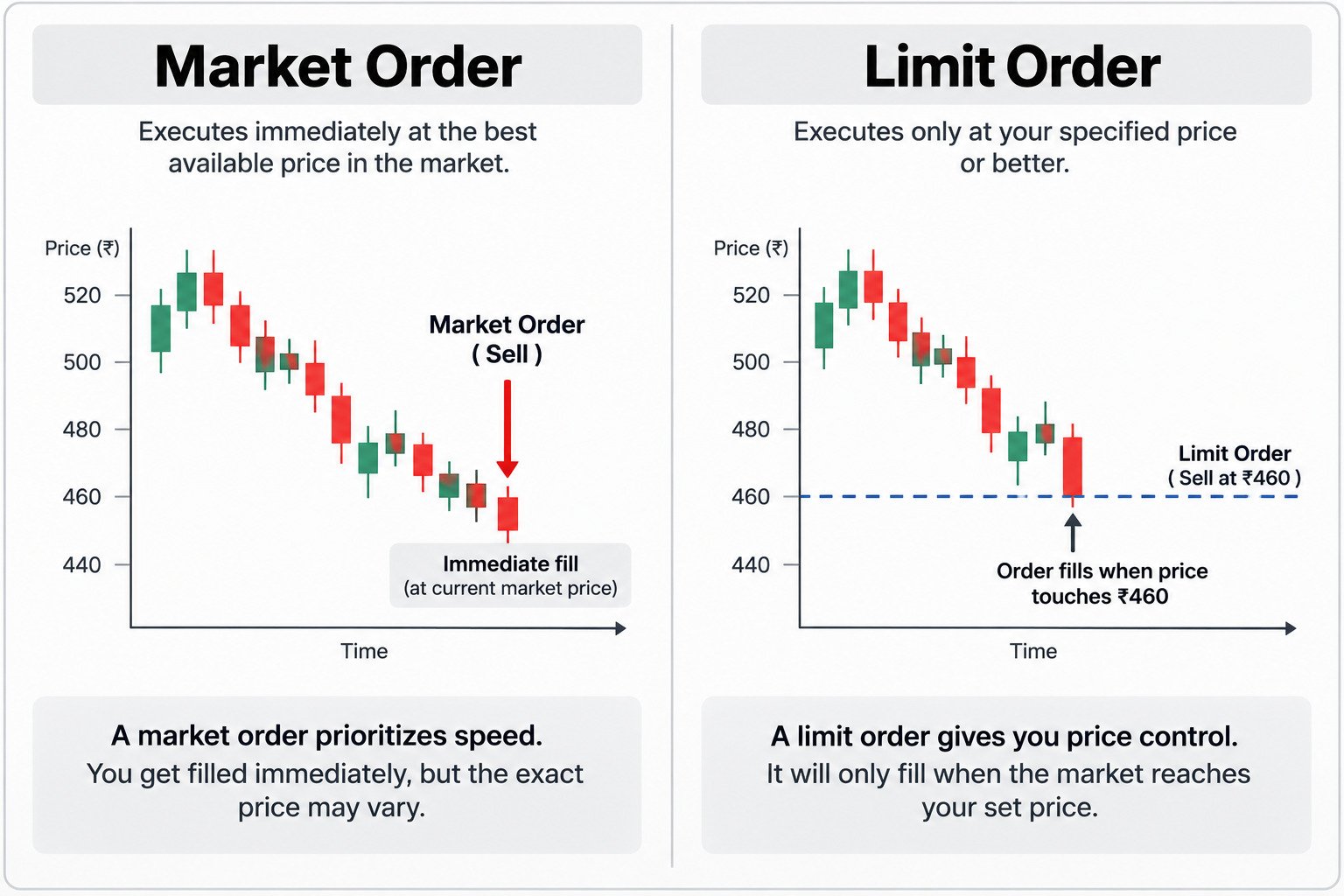
A market order buys or sells immediately at whatever price is currently available — fast, but you don't control the exact price. A limit order lets you set the exact price you're willing to accept — you control price, but the order may not fill if the market never reaches it.
New traders often default to market orders for simplicity, but limit orders give meaningfully more control, especially in volatile conditions.
3. Intraday Trade — A Walkthrough
An intraday trade is opened and closed within the same trading day — no position is carried overnight. This limits overnight risk (news, gaps) but demands closer, real-time attention during market hours.
A basic intraday walkthrough: identify a level (support/resistance or a moving average), wait for price to confirm direction with volume, enter with a tight, pre-defined stop-loss, and exit at your target or by end of day — whichever comes first.

4. Position Trade — A Walkthrough
A position trade is held over several days to weeks (sometimes longer), aiming to capture a bigger move than an intraday trade would. It requires wider stop-losses to allow for normal day-to-day noise, but far less constant screen-watching.
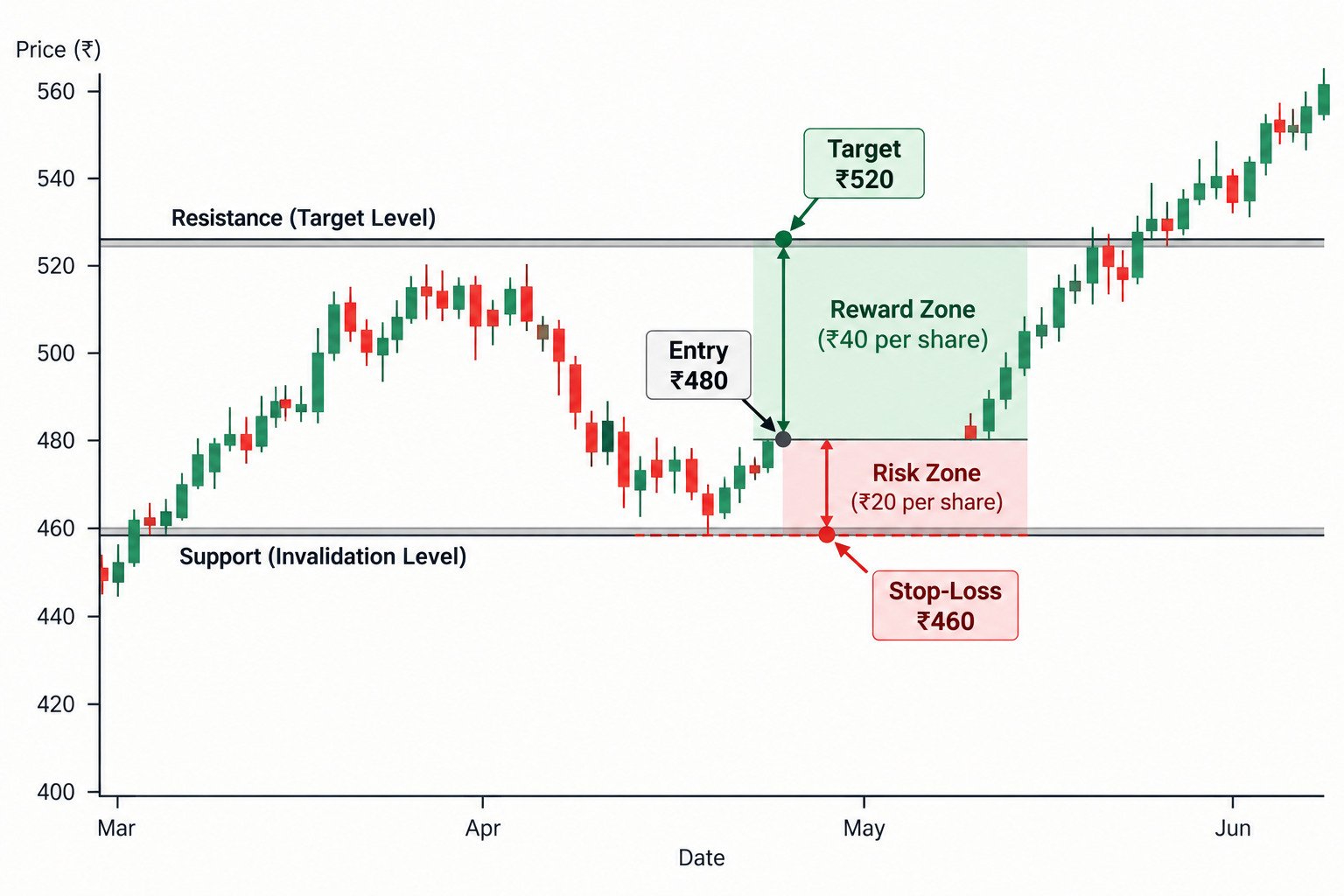
A basic walkthrough: identify a stock in a clear trend, enter on a pullback to support (in an uptrend) with a stop below that support, and hold while the trend structure remains intact — exiting when that structure breaks.

5. Setting Your Stop-Loss and Target
Your stop-loss should be set by chart structure — a level that, if broken, genuinely invalidates the reason you entered the trade — not by how much rupee loss feels emotionally comfortable.
Your target should be set with a similar logic — the next meaningful resistance (or support, if short) — giving you a realistic risk-reward ratio decided in advance, not adjusted mid-trade based on hope.