Introduction
Even a perfectly-read chart can lead to a poor outcome if emotion takes over at the moment of decision. This module covers the mental discipline that separates consistent traders from everyone else.
1. Investor vs Trader Mindset
An investor typically holds for years, focused on a business's long-term value. A trader operates on much shorter timeframes, focused on price movement itself. Confusing the two — turning a losing trade into an accidental 'long-term investment' — is one of the most common beginner mistakes.
Decide which one you're doing *before* entering a position, not after it moves against you.

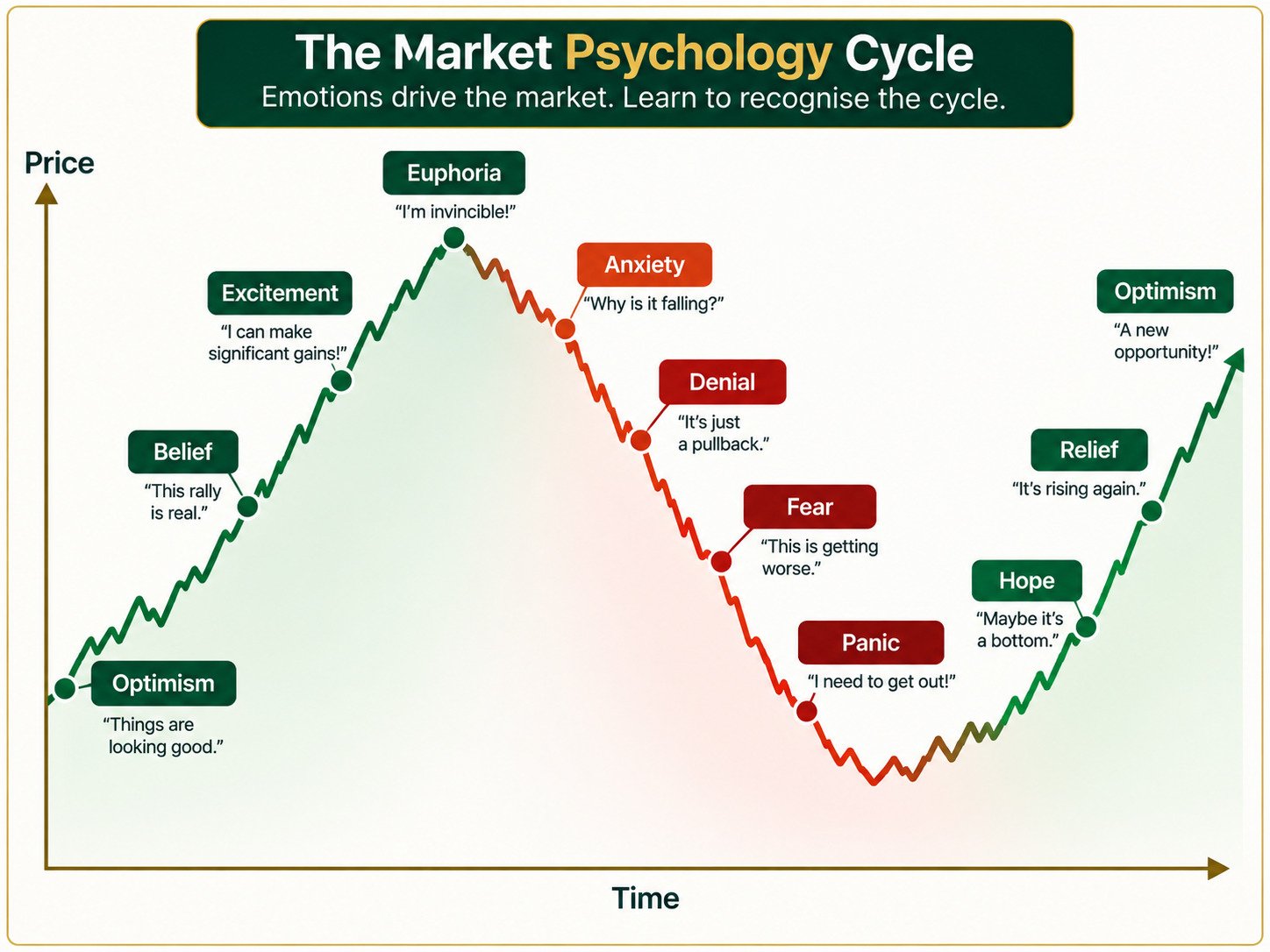
2. Fear & Greed
Fear causes traders to exit good positions too early or avoid good opportunities entirely. Greed causes traders to hold losing positions too long hoping for a turnaround, or oversize winning positions recklessly.
Both emotions are normal — the goal isn't to eliminate them, it's to have a written plan you follow regardless of how you're feeling in the moment.
3. Common Trading Mistakes
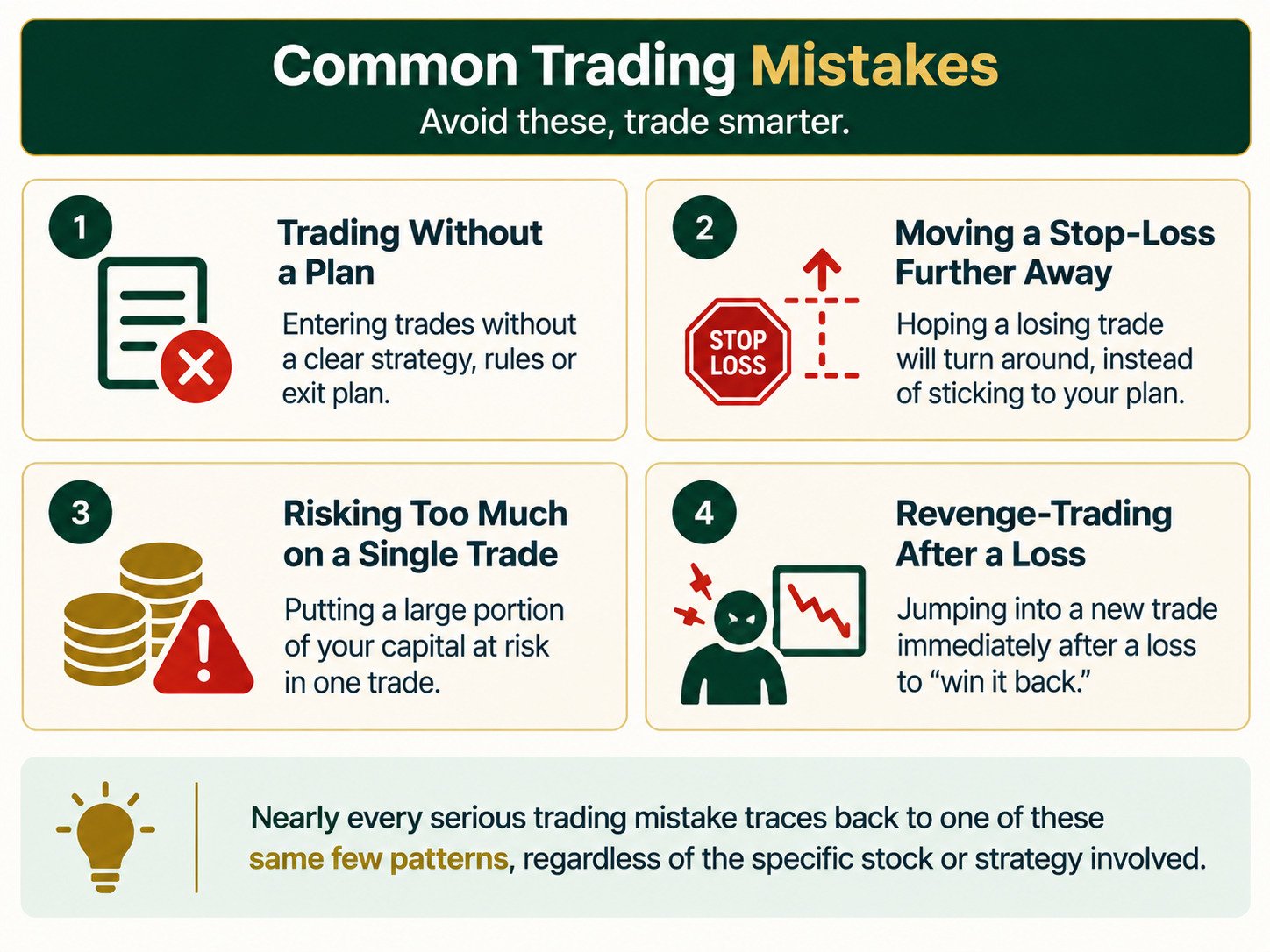
Some of the most frequent mistakes: trading without a plan, moving a stop-loss further away hoping a loser turns around, risking too much on a single trade, and revenge-trading immediately after a loss to 'win it back.'
Nearly every serious trading mistake traces back to one of these same few patterns, regardless of the specific stock or strategy involved.
4. Discipline & Journaling
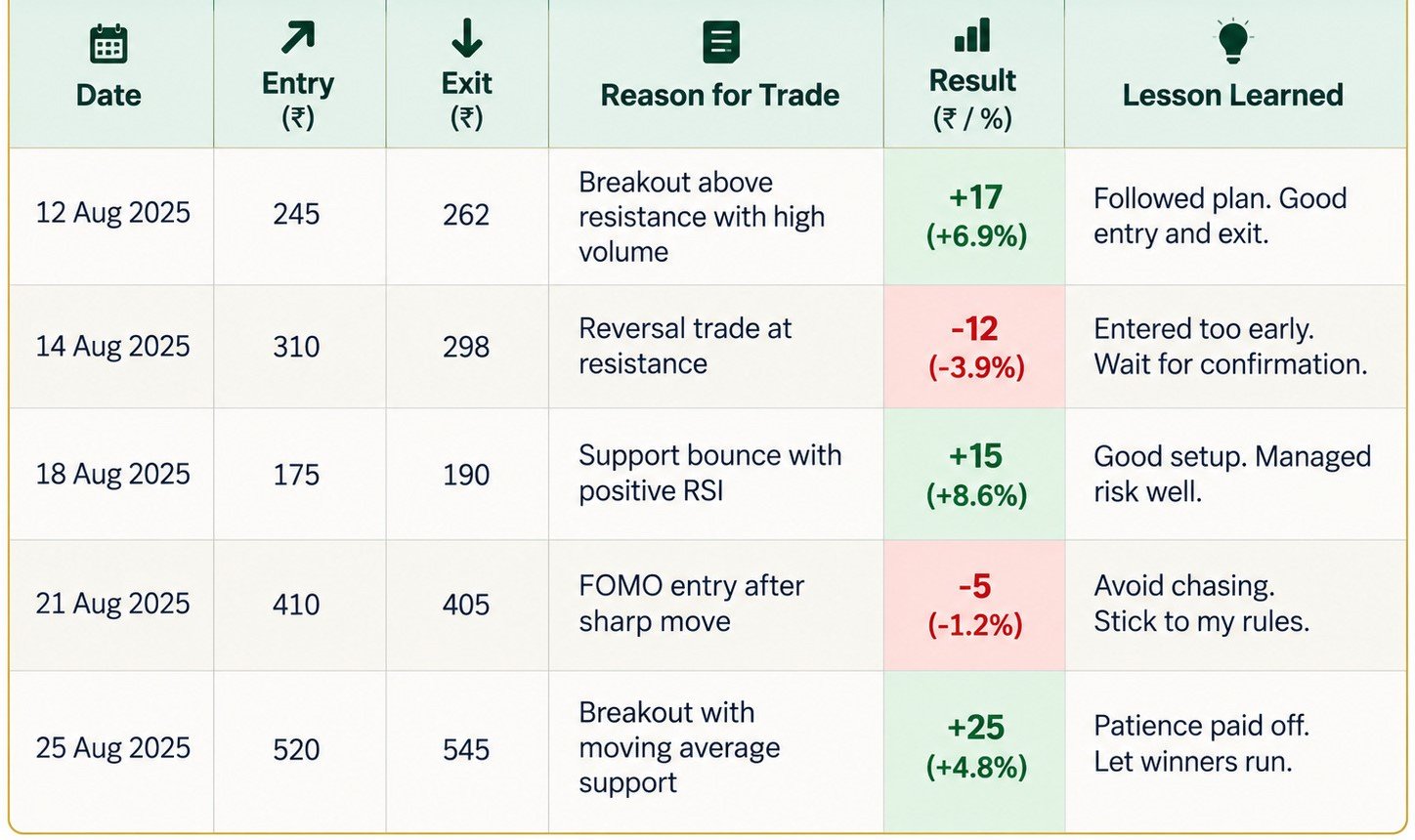
Keeping a simple trading journal — what you traded, why, what happened, what you'd do differently — turns scattered experience into an actual improvement process over time.
Discipline isn't about never breaking a rule; it's about noticing when you did, and understanding why, rather than repeating the same mistake unexamined.
5. Overcoming FOMO
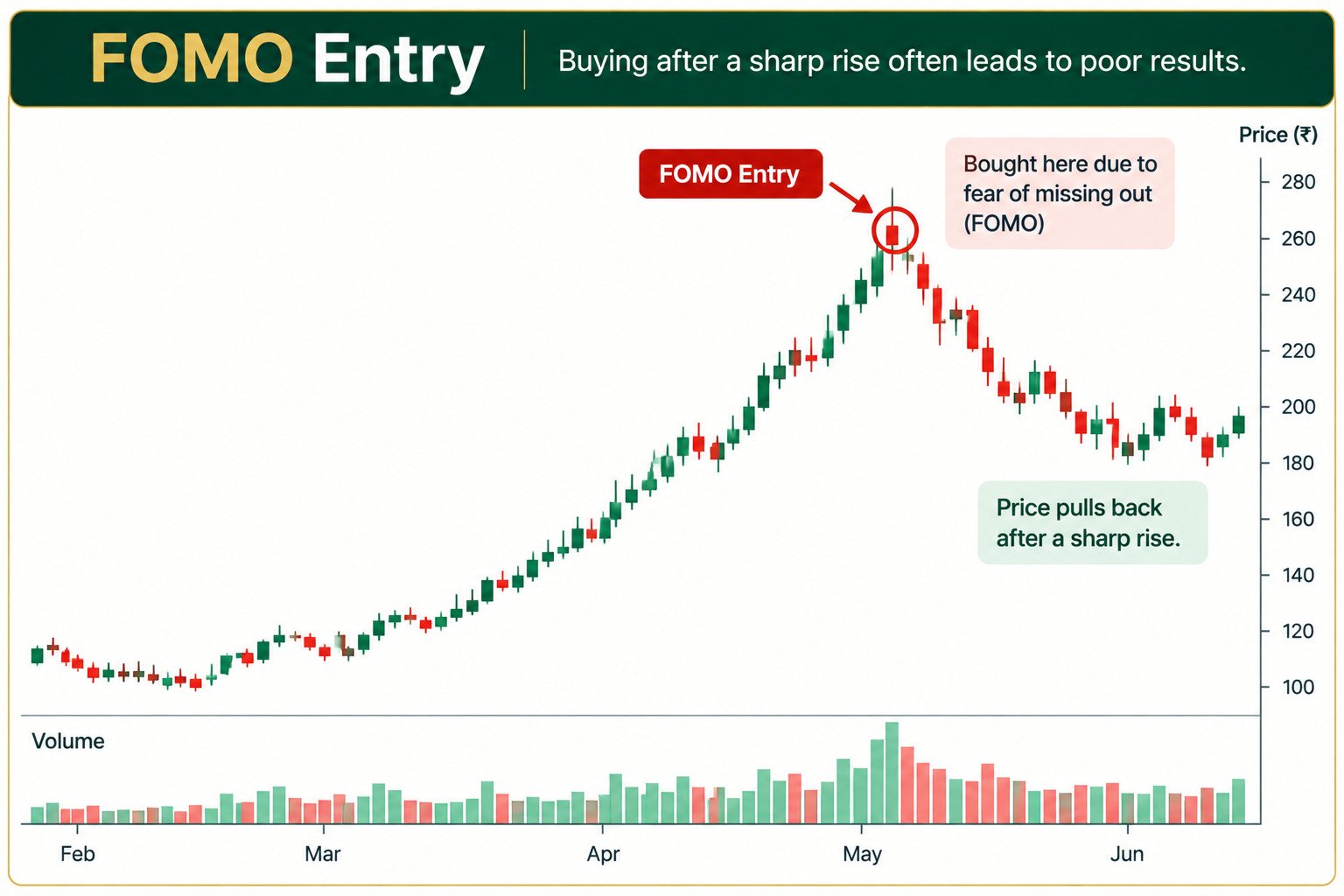
FOMO (fear of missing out) drives traders to chase a stock that's already moved sharply, often buying right near a short-term top out of pure urgency.
The most reliable defence against FOMO is a written checklist of entry conditions — if a trade doesn't meet your own criteria, the fact that it's 'moving fast' isn't a reason to override that.