Introduction
Individual candlesticks and short candle sequences can reveal a lot about the tug-of-war between buyers and sellers. This module covers the small set of patterns genuinely worth knowing, rather than every possible variation.
1. Hammer & Inverted Hammer
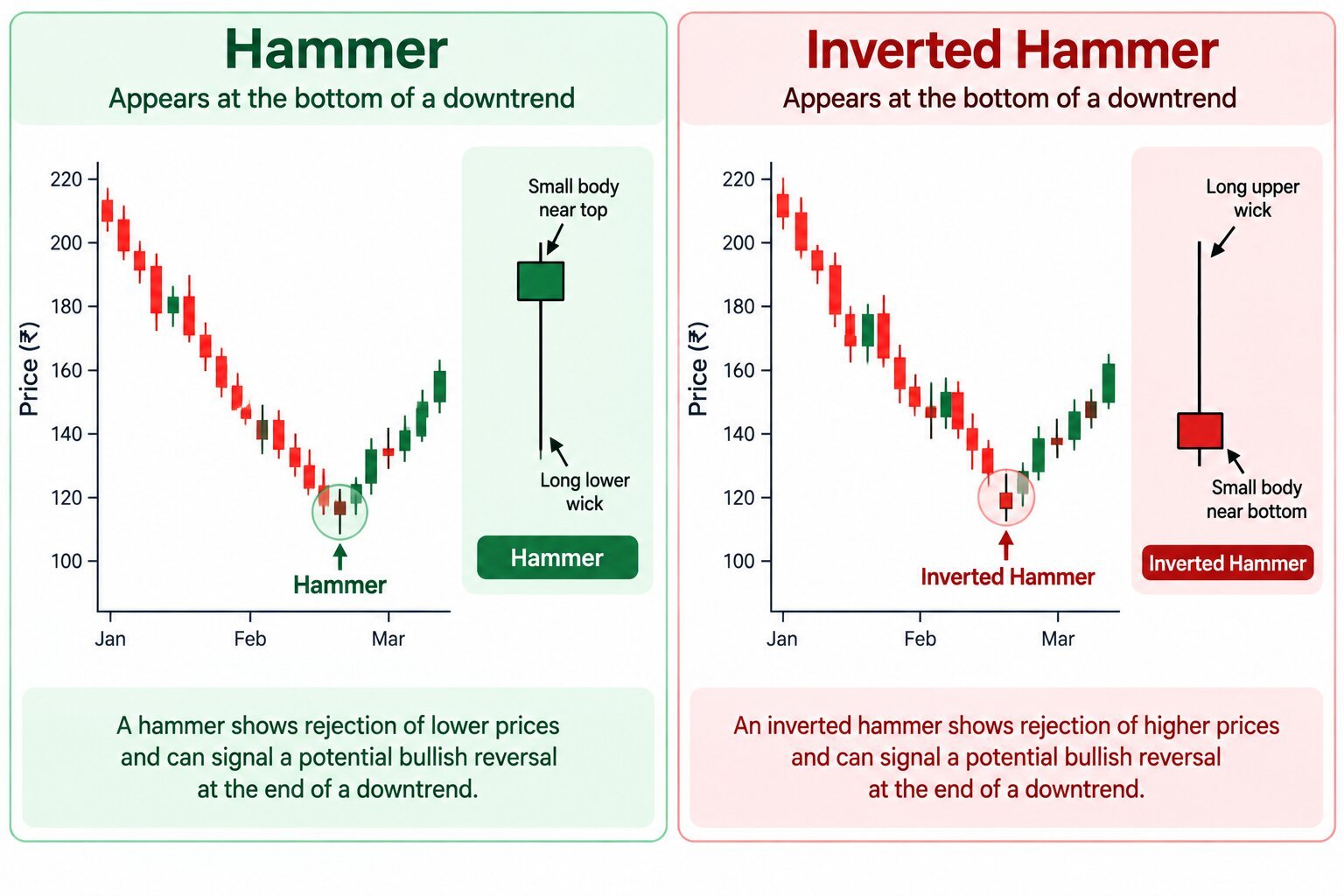
A hammer has a small body near the top with a long lower wick — it forms after a decline and signals buyers stepped in hard, potentially marking a bottom. An inverted hammer looks the same shape but flipped, with the long wick on top.
Both are only meaningful in context — a hammer after a long downtrend is a real signal; the same shape in the middle of a sideways range means far less.
2. Engulfing Patterns
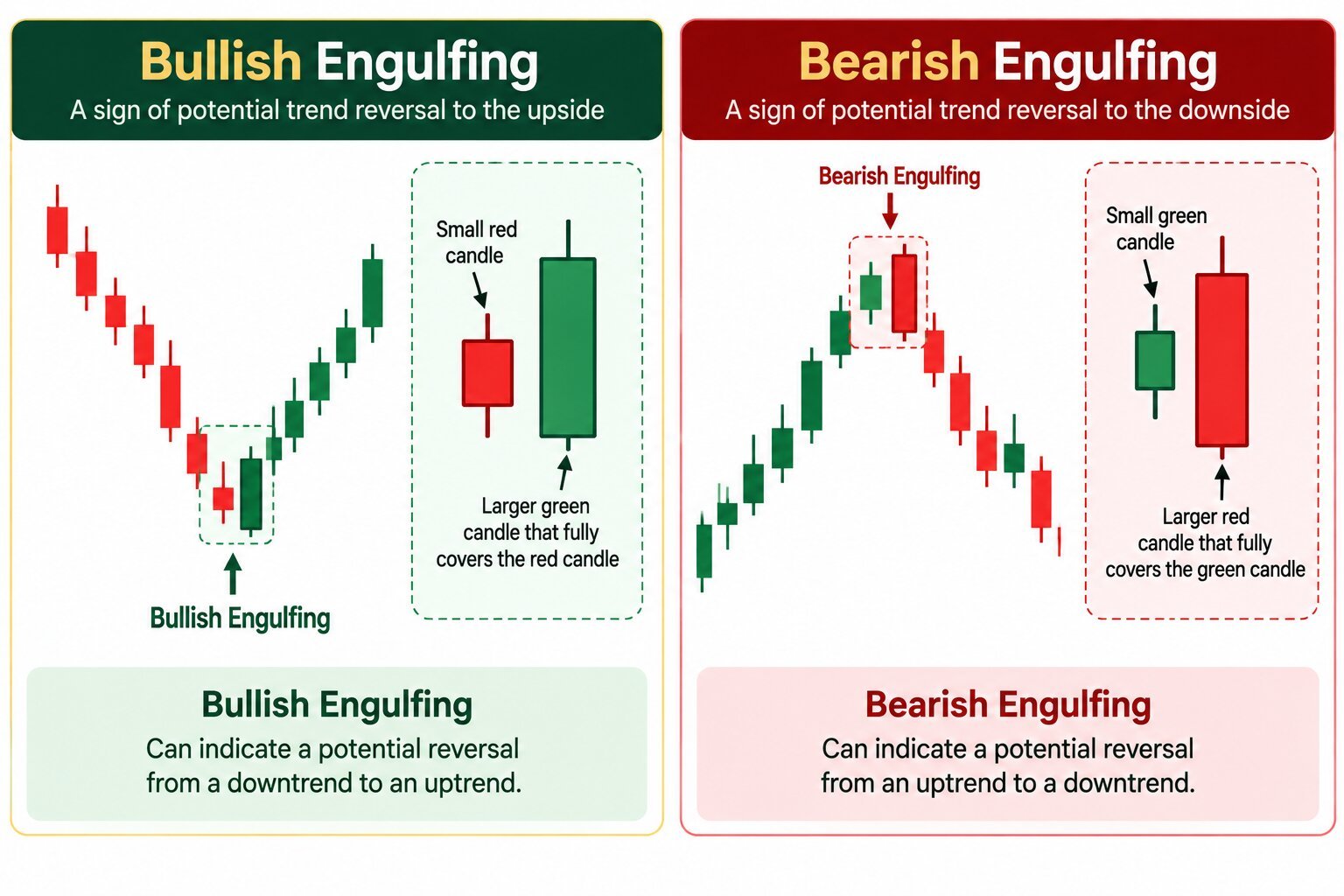
A bullish engulfing pattern is a small red candle followed by a larger green candle that completely 'engulfs' the previous candle's body — a sharp shift from selling to buying pressure. A bearish engulfing is the mirror image.
These are among the most reliable two-candle reversal signals, especially when they appear right at a support or resistance level.
3. Doji
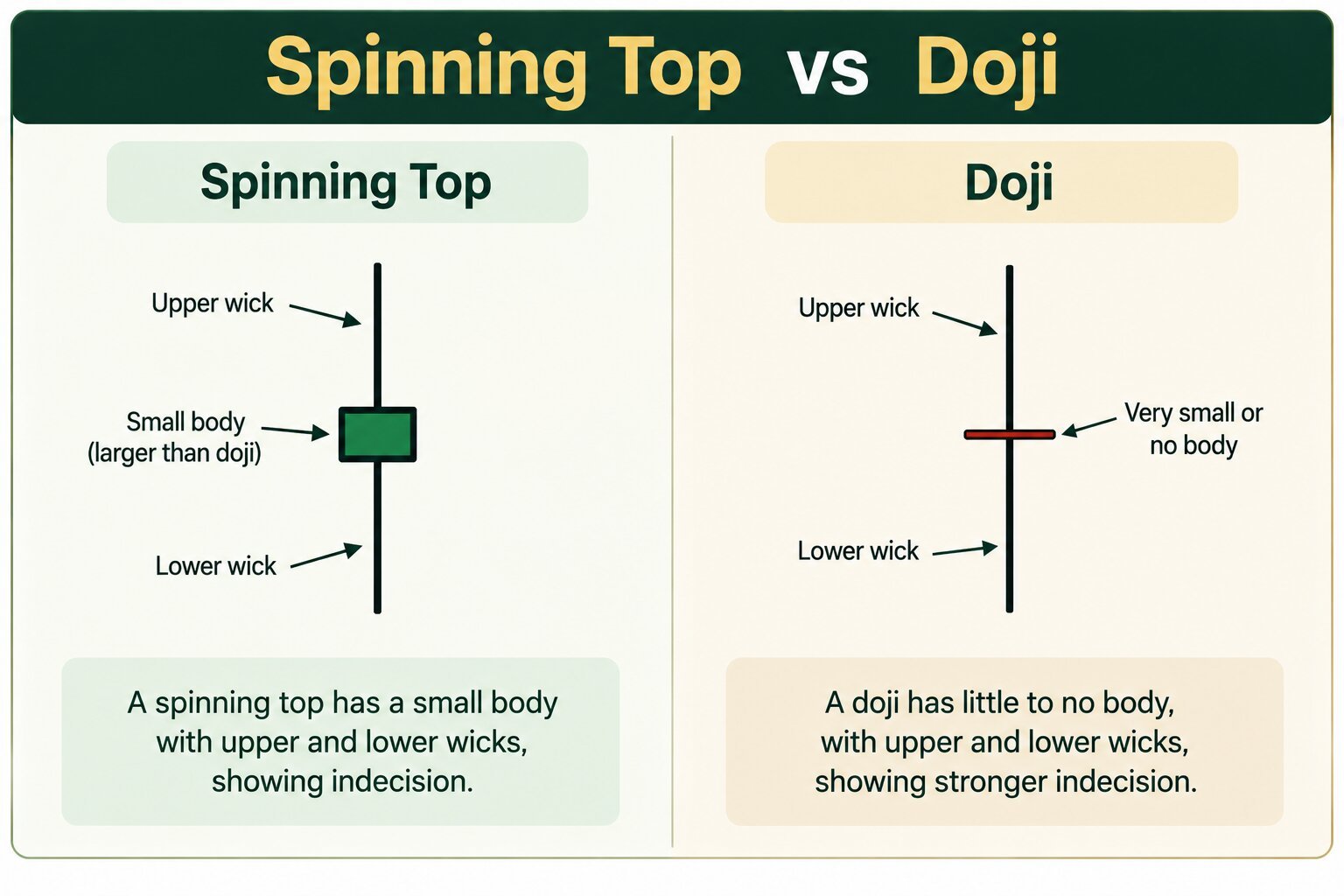
A doji forms when the open and close are nearly identical, leaving little to no body — just wicks on either side. It represents genuine indecision: neither buyers nor sellers won that round.
A doji after a strong trend often (not always) signals the trend is running out of steam and a reversal or pause may follow.

4. Morning Star & Evening Star
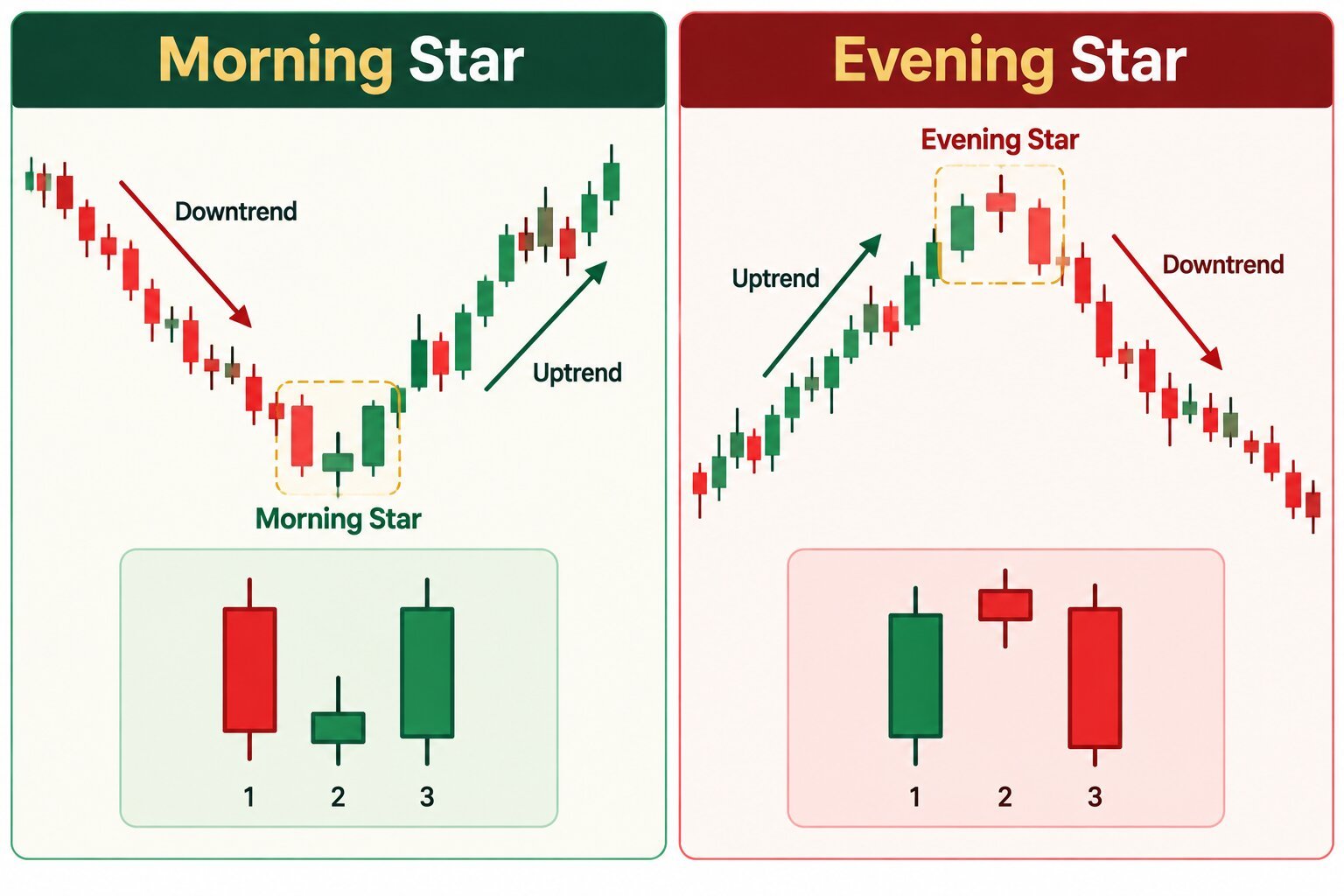
A morning star is a three-candle bottoming pattern: a long red candle, a small indecisive candle, then a strong green candle — signalling a potential shift from decline to advance. An evening star is the same pattern inverted, at the top of an uptrend.
These carry more weight than single-candle patterns because they show a genuine multi-day shift in sentiment, not just one day's noise.
5. Spinning Top
A spinning top has a small body with wicks of roughly similar length on both sides — similar to a doji but with a slightly larger body. It shows a tug-of-war where neither side gained real ground.
Like the doji, its significance depends entirely on where it appears — after a strong move, it's worth paying attention to; in a quiet range, it's just noise.