Introduction
Almost every trading and investing approach works best when aligned with the prevailing trend rather than fighting against it. This module teaches you to identify, draw, and trust trend structure with confidence.
1. What Is a Trend?
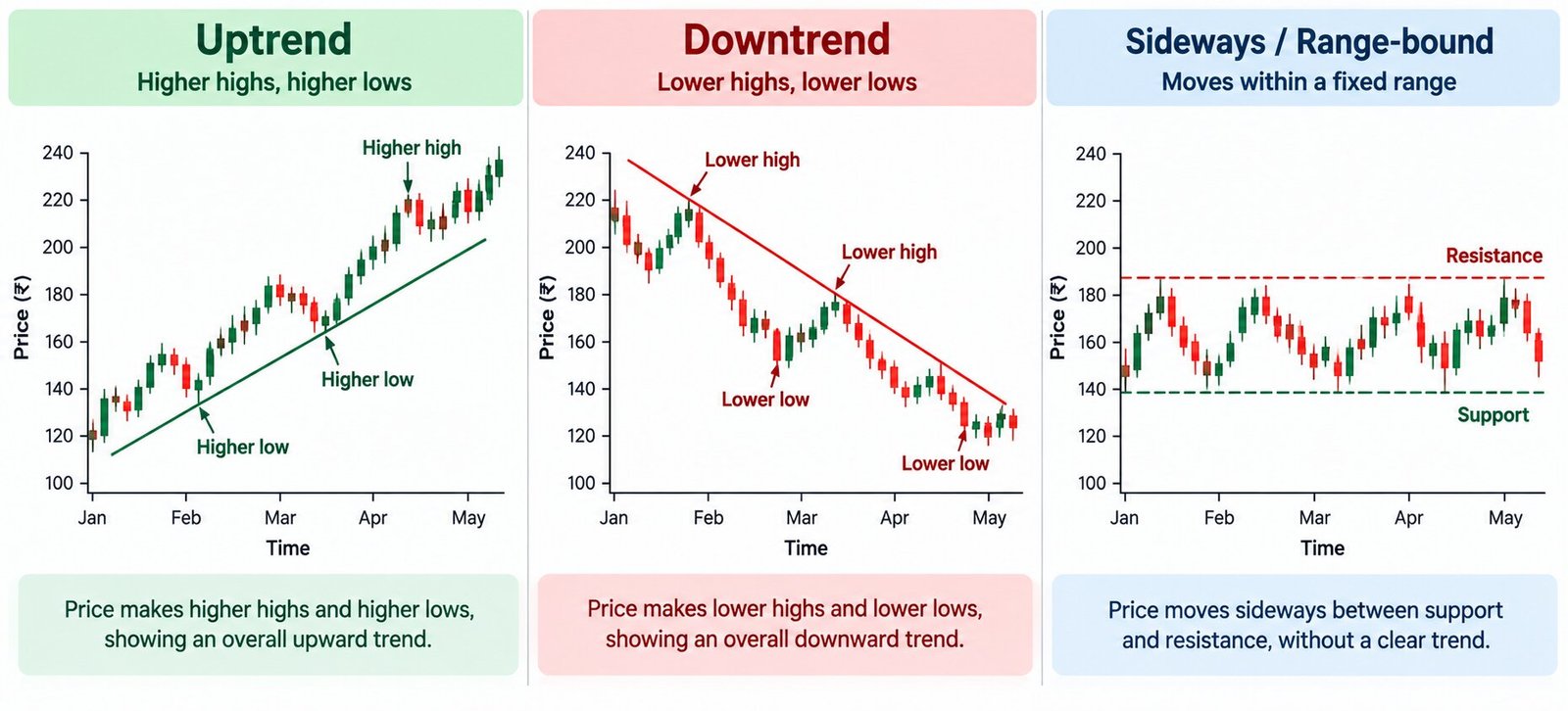
A trend is simply the general direction price is moving — up, down, or sideways. An uptrend shows a series of higher highs and higher lows; a downtrend shows lower highs and lower lows.
Most trading and investing approaches work best when aligned with the prevailing trend rather than fighting against it.
2. Higher Highs, Higher Lows — Reading Trend Structure
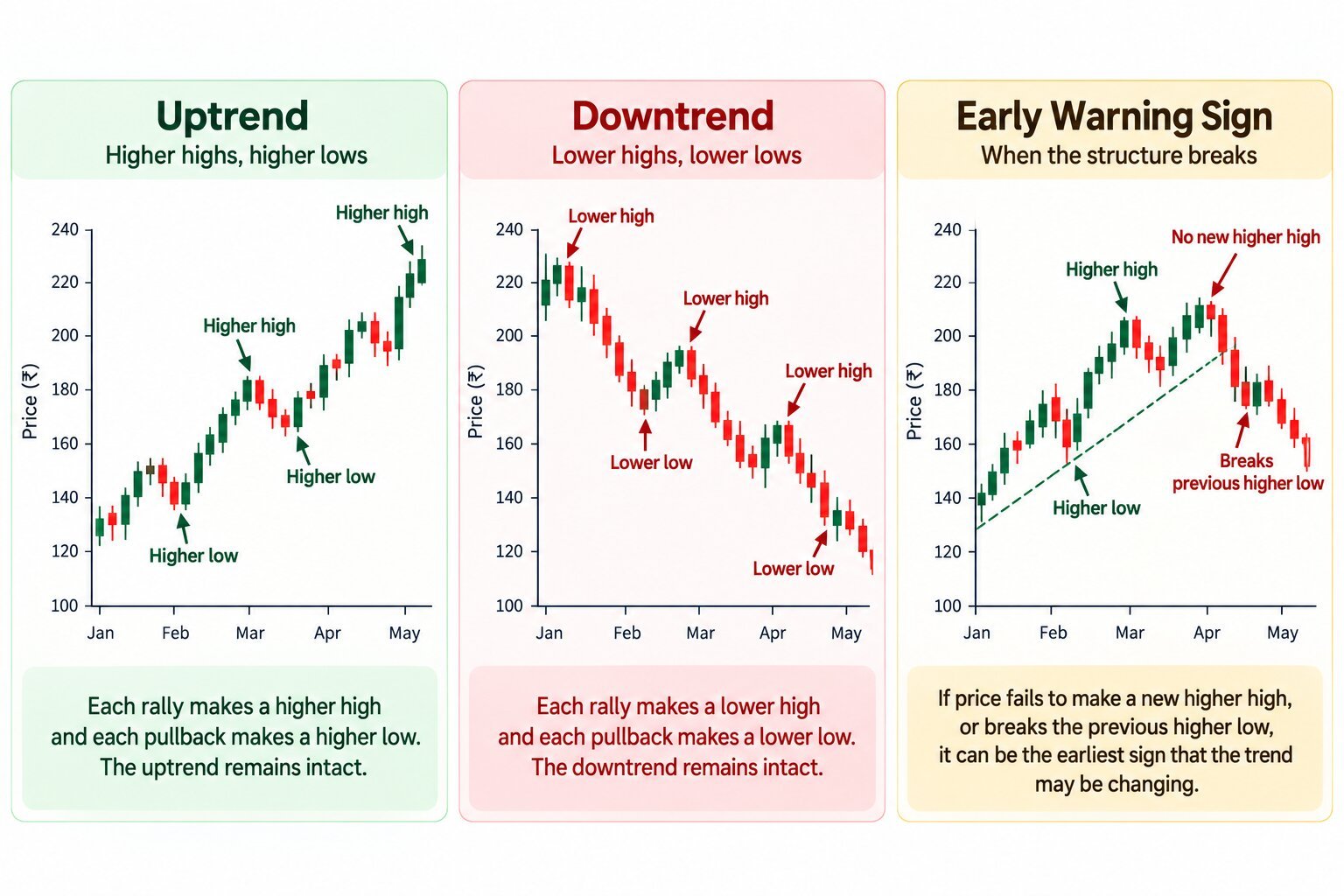
The clearest sign an uptrend is intact is a repeating pattern: each rally reaches a higher point than the last, and each pullback stays higher than the previous pullback's low.
The moment a downtrend fails to make a new higher high, or an uptrend fails to hold above its previous higher low, is often the earliest structural warning that the trend may be changing.
3. Drawing Trendlines Correctly
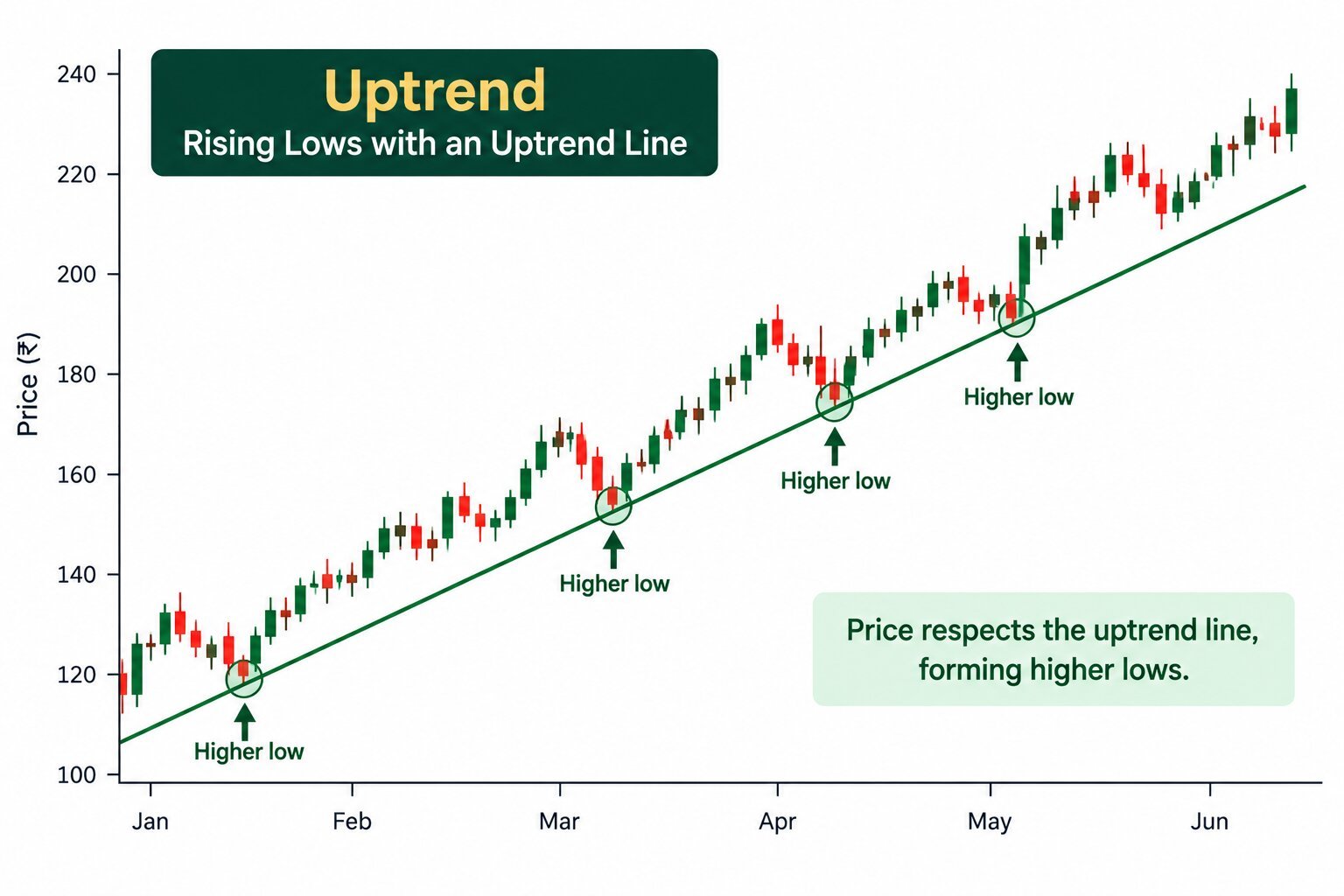
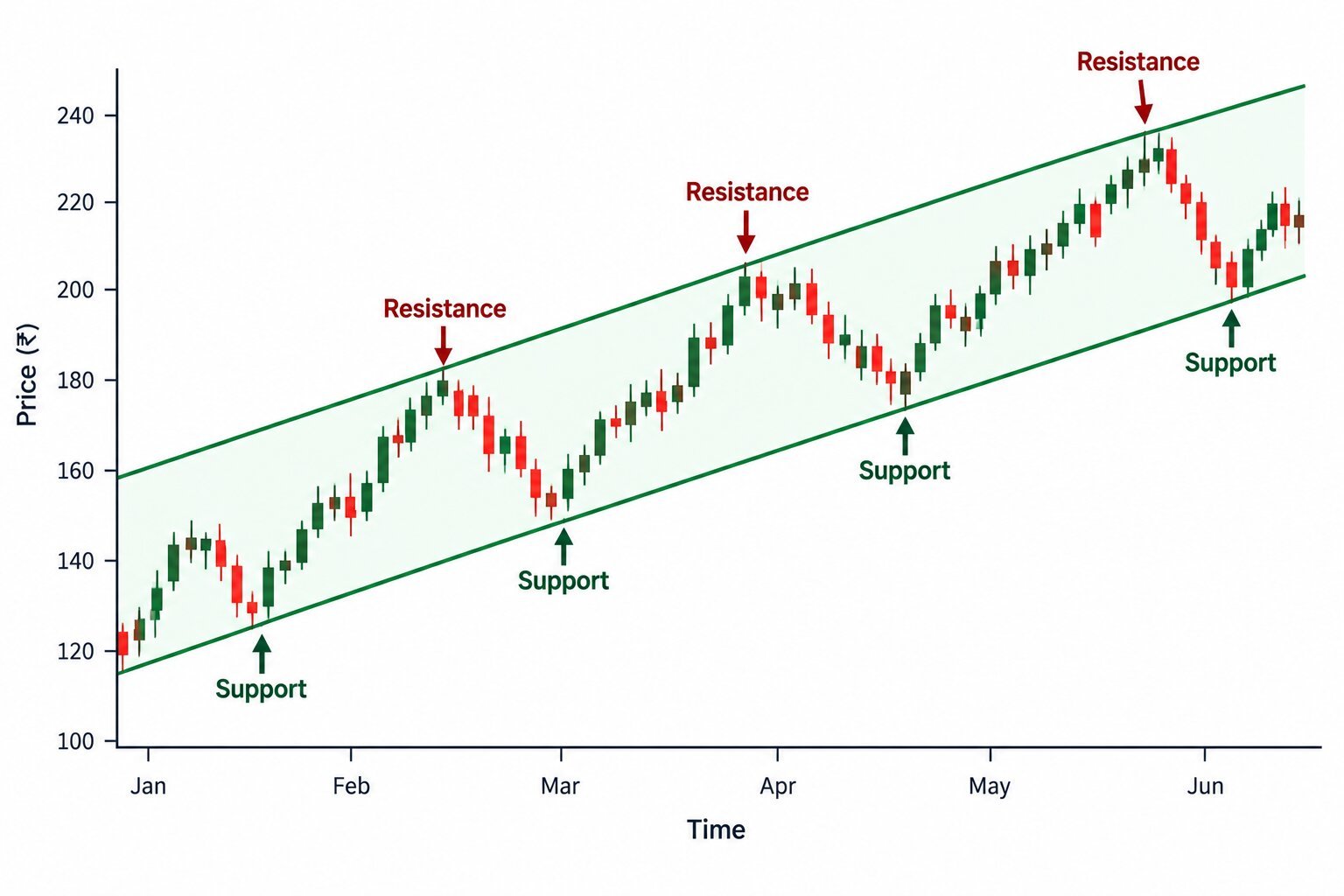
An uptrend line connects a series of rising lows; a downtrend line connects a series of falling highs. The line should touch at least two or three points to be considered meaningful, not just two random candles.
As long as price respects that line — bouncing off it repeatedly — the trend is considered intact. A clean break through the line is often an early signal the trend is weakening.
4. Trend Channels
A trend channel is formed by drawing a second, parallel line on the opposite side of a trendline — creating a 'corridor' that price tends to move within during a steady trend.
Price reaching the far side of the channel (the opposite boundary from the trendline) is often where a short-term pullback becomes more likely, even within an intact overall trend.
5. Trend Reversal vs Pullback — Telling Them Apart
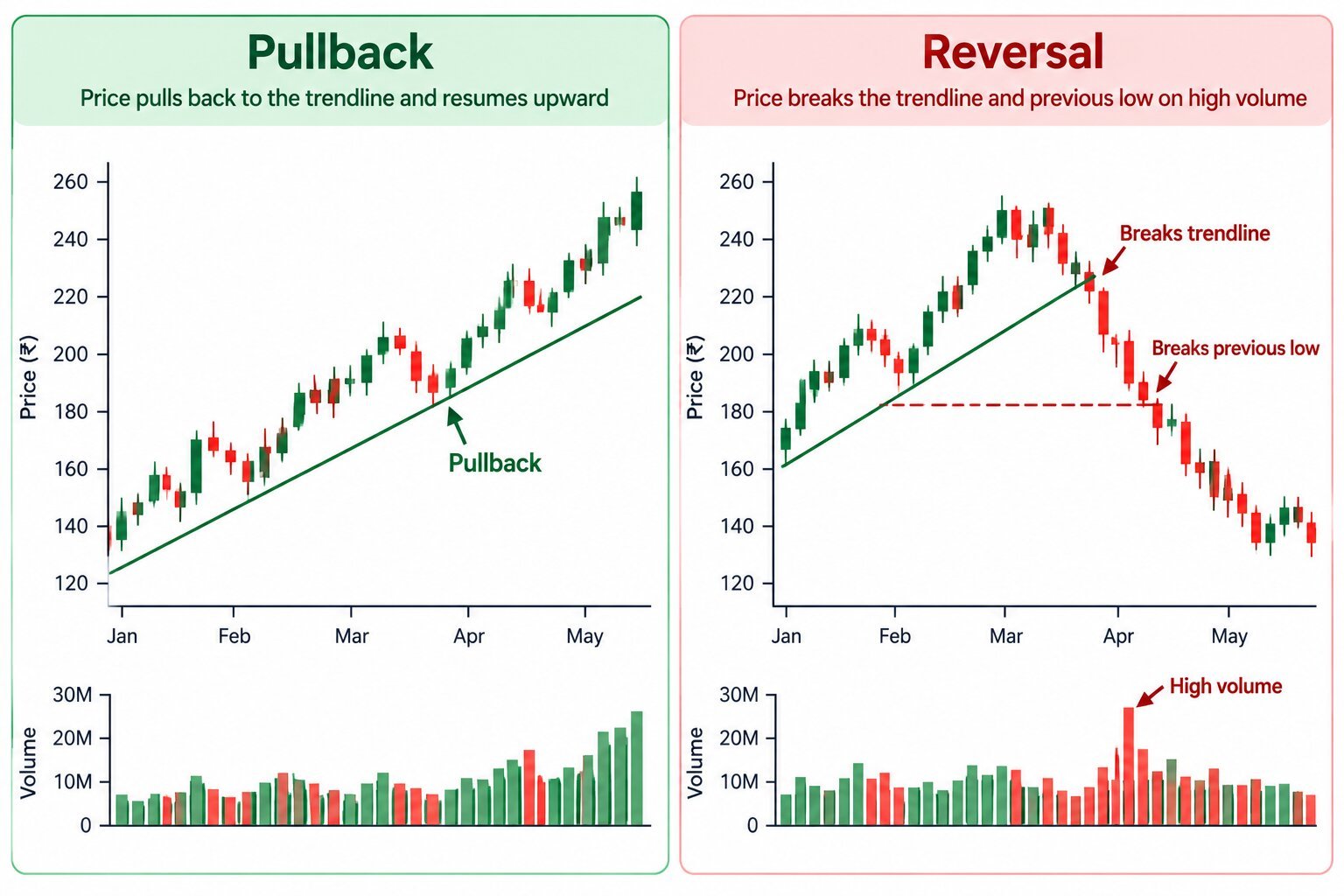
A pullback is a normal, temporary pause within an ongoing trend; a reversal is a genuine change in the trend's direction. Confusing the two is one of the most common — and costly — mistakes traders make.
A pullback typically respects the trendline and prior higher-low structure; a reversal breaks both, often on noticeably higher volume than the pullbacks that came before it.